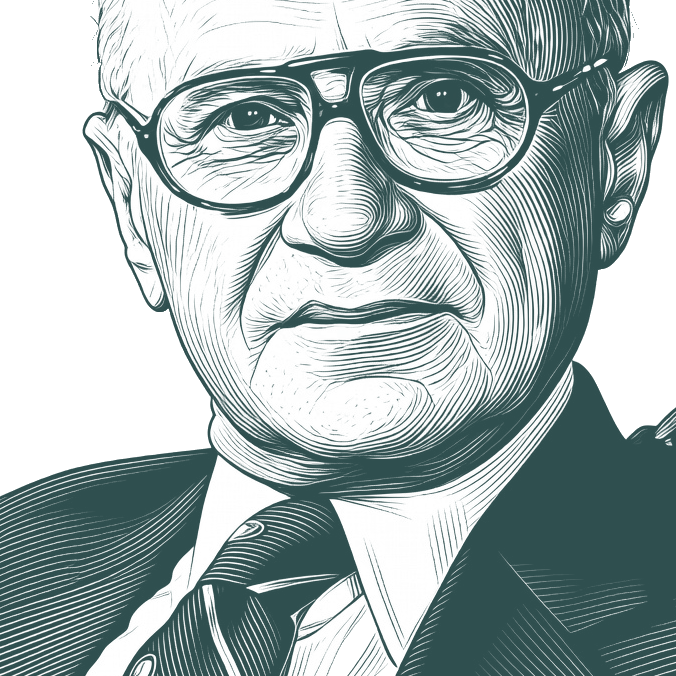
. . . there is no alternative way, so far discovered, of improving the lot of the ordinary people that can hold a candle to the productive activities… - Milton Friedman
""
. . . there is no alternative way, so far discovered, of improving the lot of the ordinary people that can hold a candle to the productive activities that are unleashed by a free enterprise system.
English
Collect this quote
About
Milton Friedman
Milton Friedman (31 July 1912 – 16 November 2006) was an American economist noted for his support for free markets and a reduction in the size of government. In 1976 he was awarded a Nobel Prize in Economics.
Biography information from
Wikiquote·
Portrait adapted from
Wikimedia Commons, Bachrach Studios (Public domain / CC0)
It is a mark of the political freedom of a capitalist society that men can openly advocate and work for socialism.
The existence of a free market does not of course eliminate the need for government. On the contrary, government is essential both as a forum for determining the 'rule of the game' and as an umpire to interpret and enforce the rules decided on.
Unlimited Quote Collections
Organize your favorite quotes without limits. Create themed collections for every occasion with Premium.