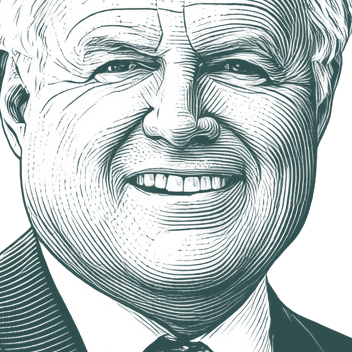
This was a very powerful presentation, in terms of starkness, about health and health insurance and coverage, and basically the moral issue presented… - Ted Kennedy
""
This was a very powerful presentation, in terms of starkness, about health and health insurance and coverage, and basically the moral issue presented here. We were all in the same circumstance. This is a very rare disease that could have happened to anybody. It happened to a United States Senator; it happened to children of working families. There was nothing that they could do about it, and they were being put through this kind of system. This is about as stark as you can get, in terms of the compelling aspects of this issue. A secondary issue that came up that’s related to the public policy is family and medical leave. I’d have to leave the Senate on Friday, and I could go and tell Mike Mansfield that I wasn’t going to be there. Just in terms of the votes, I wasn’t going to be there. It wasn’t a question about me not—I should be with my son and I was going to be with him, but I wasn’t going to lose my job because I was leaving, and I was getting paid for it while I was gone. I was getting paid leave on this.
Edward Moore "Ted" Kennedy (22 February 1932 – 25 August 2009) was the senior Democratic U.S. senator from Massachusetts. In office from November 1962 to August 2009, Kennedy was, at the time, the second-longest serving member of the Senate, after Robert Byrd of West Virginia. He was the younger brother of John F. Kennedy and Robert F. Kennedy, and the uncle of Caroline Kennedy.
Portrait adapted from
Wikimedia Commons, Ted_Kennedy,_official_photo_portrait.jpg: United States Senate derivative work: Tktru (talk) (Public domain / CC0)
Also Known As
Birth Name:
Edward Moore Kennedy
Native Name:
Edward Kennedy
Alternative Names:
Edward Moore "Ted" Kennedy
•
Edward M. Kennedy
The serious issue before us tonight is the cause for which the Democratic Party has stood in its finest hours— the cause that keeps our party young— and makes it, in the second century of its age, the largest political party in this Republic and the longest-lasting political party on this planet. Our cause has been, since the days of Thomas Jefferson, the cause of the common man— and the common woman. Our commitment has been, since the days of Andrew Jackson, to all those he called “the humble members of society— the farmers, mechanics, and laborers.” On this foundation, we have defined our values, refined our policies, and refreshed our faith.
So this aspect of health and the coverage and the rest of the policy issues are all rooted in a very early association and personal attachment. Finally, the policy issues come and attach themselves in different ways, and we can talk about that. You can talk about how people who have a preexisting condition—Even Teddy, who has had cancer—even though he’s 47 years old, he could not get an individual insurance policy today, because he’s had cancer, even though he’s as healthy and strong as can be. He could not go out and buy, in the United States, an individual policy. That’s the way it is. That’s the way the system works on this. Obviously, he’s in a group—but then, if he left that group, could he still carry on through? You didn’t used to be able to, but you’ve got the [Nancy] Kassebaum bill now that says that they can’t discriminate against—if he’s gotten into the system, they can’t knock him out. But that’s sort of a feature of the policy. We can go back now to a time when we got started in the health policy issues, but I think it’s at least of some importance and consequence how we got into it.
Enhance Your Quote Experience
Enjoy ad-free browsing, unlimited collections, and advanced search features with Premium.
One of the most dramatic that I still remember so clearly was in Chicago. It was two families that had children who had spina bifida. In the U.S. family the mother was a schoolteacher and the husband was a construction worker, and they made a good chunk of change and had a very good life. There was one other child in the family. Then the mother had to stop teaching school to take care of the child because it got sicker and sicker. And then, because the mother got run down, the husband quit his job. They went through all their savings looking after this child, and the result was that the state was going to take away the child because the parents could no longer take care of this child. You had the mother and the father completely distraught about this. This was out in Chicago.