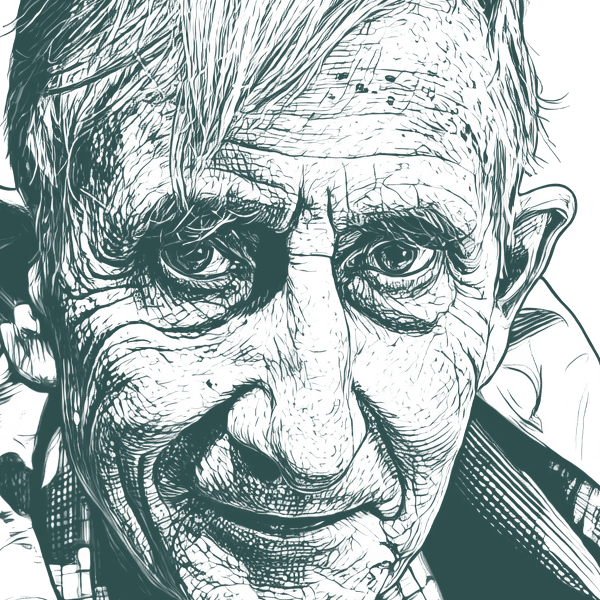
Freeman John Dyson (15 December 1923 – 28 February 2020) was an English-born American physicist, mathematician, and futurist, famous for his work in quantum mechanics, nuclear weapons design and policy, and the search for extraterrestrial intelligence. He was the winner of the Templeton Prize in the year 2000.
The public has a distorted view of science, because children are taught in school that science is a collection of firmly established truths. In fact, science is not a collection of truths. It is a continuing exploration of mysteries. (New York Review of Books, 2011)
The poorer half of humanity needs cheap housing, cheap health care, and cheap education, accessible to everybody, with high quality and high aesthetic standards. The fundamental problem for human society in the next century is the mismatch between the three new waves of technology and the three basic needs of poor people. The gap between technology and needs is wide and growing wider. If technology continues along its present course, ignoring the needs of the poor and showering benefits upon the rich, the poor will sooner or later rebel against the tyranny of technology and turn to irrational and violent remedies. In the future, as in the past, the revolt of the poor is likely to impoverish rich and poor together.
Works in ChatGPT, Claude, or Any AI
Add semantic quote search to your AI assistant via MCP. One command setup.
Black holes were invented by J. Robert Oppenheimer and Hartland Snyder in 1939. Starting from Einstein's theory of general relativity, Oppenheimer and Snyder found solutions of Einstein's equations that described what happens to a massive star when it has exhausted its supplies of nuclear energy. The star collapses gravitationally and disappears from the visible universe, leaving behind only an intense gravitational field to mark its presence. The star remains in a state of permanent free fall, collapsing endlessly inward into the gravitational pit without ever reaching the bottom. This solution of Einstein's equations was profoundly novel. It has had enormous impact on the later development of astrophysics.