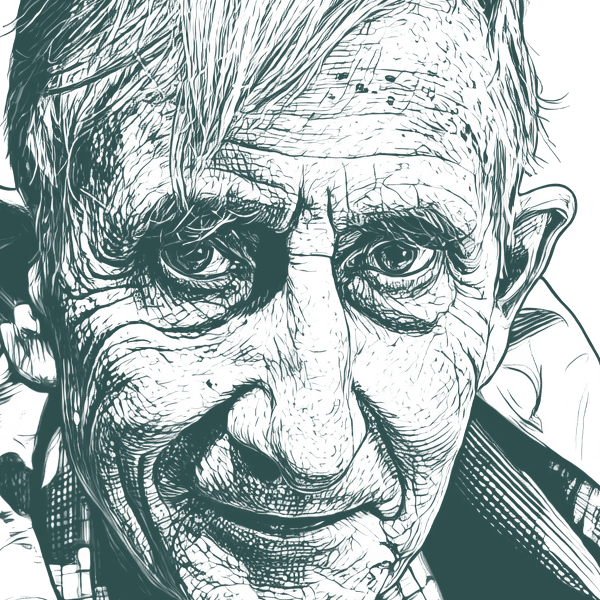
A ciência trabalha para o mal quando seu efeito é proporcionar brinquedos para os ricos; trabalha para o bem quando seu efeito é satisfazer as necess… - Freeman Dyson
""
A ciência trabalha para o mal quando seu efeito é proporcionar brinquedos para os ricos; trabalha para o bem quando seu efeito é satisfazer as necessidades dos pobres. O preço baixo é uma virtude essencial. A motocicleta trabalhou para o bem porque era tão barata que um professor primário podia comprá-la. A energia nuclear funcionou principalmente para o mal, porque permaneceu um brinquedo para governos ricos e empresas ricas.
Freeman John Dyson (15 December 1923 – 28 February 2020) was an English-born American physicist, mathematician, and futurist, famous for his work in quantum mechanics, nuclear weapons design and policy, and the search for extraterrestrial intelligence. He was the winner of the Templeton Prize in the year 2000.
Scientifically speaking, a butterfly is at least as mysterious as a superstring. When something ceases to be mysterious it ceases to be of absorbing interest to scientists. Almost all things scientists think and dream about are mysterious.
The expansion of life, moving out from Earth into its inheritance, is an even greater theme than the expansion of England across the Atlantic. As Hakluyt wrote that there is under our noses the great and ample country of Virginia, I am saying that there is under our noses the territory of nine planets, forty moons, ten thousand asteroids and a trillion comets.
Try QuoteGPT
Chat naturally about what you need. Each answer links back to real quotes with citations.
There is no easy solution to the conflict between fundamentalist Christian dogma and the facts of biological evolution. I am not saying that the conflict could have been altogether avoided. I am saying only that the conflict was made more bitter and more damaging, both to religion and to science, by the dogmatic and self-righteousness of scientists. What was needed was a little more human charity, a little more willingness to listen rather than to lay down the law, a little more humility. Scientists stand in need of these Christian virtues just as much as preachers do.