Perhaps your definition of your self-system lacks authentic boundaries. You've erected a precarious structure of personality on unconscious factors o… - Philip K. Dick
""
Perhaps your definition of your self-system lacks authentic boundaries. You've erected a precarious structure of personality on unconscious factors over which you have no control. That's why you feel threatened by me.
Philip Kindred Dick (16 December 1928 – 2 March 1982) was an American writer, whose published works mainly belong to the genre of science fiction. Dick explored philosophical, sociological and political themes in novels with plots dominated by monopolistic corporations, authoritarian governments, and altered states of consciousness. In his later works, Dick's thematic focus tended to reflect his personal interest in metaphysics and theology.
Biography information from
Wikiquote·
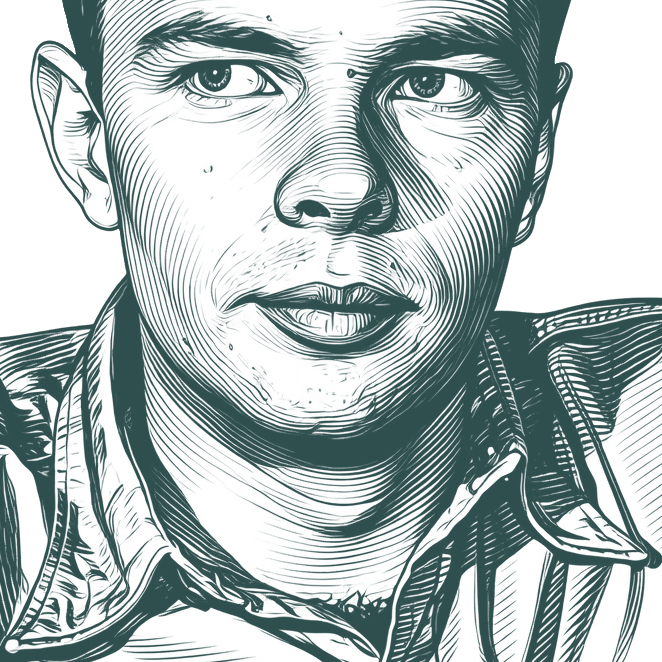
Portrait adapted from
Wikimedia Commons, Arthur Knight (photographer) (Public domain / CC0)
Also Known As
Pen Names:
Richard Phillipps
•
Jack Dowland
Birth Name:
Philip Kindred Dick
Also Known As:Phil
Alternative Names:
PKD
•
Philip Dick
•
Richard Phillips
•
Filip K. Dik
Truth, she thought. As terrible as death. But harder to find.
I did not tell Fat this, but technically he had become a Buddha. It did not seem to me like a good idea to let him know. After all, if you are a Buddha you should be able to figure it out for yourself.
PREMIUM FEATURE
Advanced Search Filters
Filter search results by source, date, and more with our premium search tools.
I think Dr. Willis McNelly at the California State University at Fullerton put it best when he said that the true protagonist of an sf story or novel is an idea and not a person. If it is *good* sf the idea is new, it is stimulating, and, probably most important of all, it sets off a chain-reaction of ramification-ideas in the mind of the reader; it so-to-speak unlocks the reader’s mind so that the mind, like the author’s, begins to create. Thus sf is creative and it inspires creativity, which mainstream fiction by-and-large does not do. We who read sf (I am speaking as a reader now, not a writer) read it because we love to experience this chain-reaction of ideas being set off in our minds by something we read, something with a new idea in it; hence the very best since fiction ultimately winds up being a collaboration between author and reader, in which both create and enjoy doing it: joy is the essential and final ingredient of science fiction, the joy of discovery of newness.