The wood-carving, the glass windows, the sculpture, inside and out, were done mostly in workshops on the spot, but besides these fixed objects, preci… - Henry Adams
""
The wood-carving, the glass windows, the sculpture, inside and out, were done mostly in workshops on the spot, but besides these fixed objects, precious works of the highest perfection filled the church treasuries. Their money-value was great then; it is greater now. No world's-fair is likely to do better today. After five hundred years of spoliation, these objects fill museums still, and are bought with avidity at every auction [....] Royalty and feudality spent their money rather on arms and clothes. The Church alone was universal patron, and the Virgin was the dictator of taste.
English
Collect this quote
About
Henry Adams
Henry Brooks Adams (16 February 1838 – 27 March 1918) was a U.S. historian, journalist, novelist and educator. He was the great-grandson of John Adams, grandson of John Quincy Adams and son of Charles Francis Adams, Sr.
Biography information from
Wikiquote·
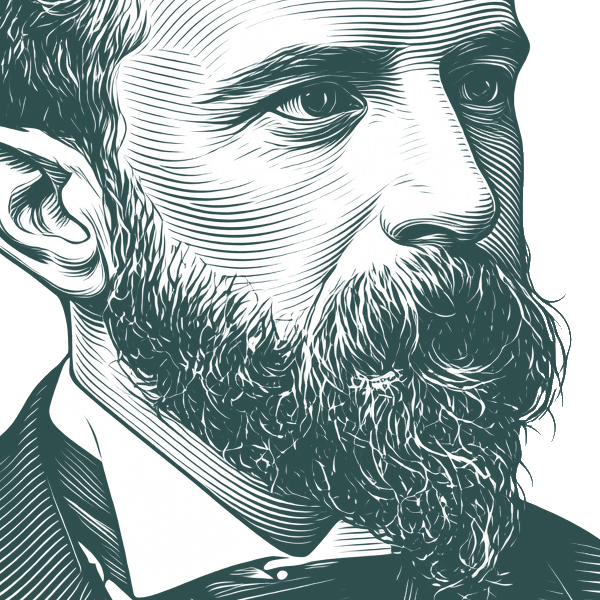
Portrait adapted from
Wikimedia Commons, William Notman (Public domain / CC0)
The matter of Gothic vaulting, with its two weak points, the flying buttress and the false, wooden shelter-roof, is the bete noire of the Beaux Arts.
...he took his lesson of political morality as learned, his notice to quit as duly served, and supposed his education to be finished. Everyone thought so, and the whole City was in a turmoil. Any intelligent education ought to end when it is complete. One would then feel fewer hesitations and would handle a surer world. The old-fashioned logical drama required unity and sense; the actual drama is a pointless puzzle, without even an intrigue. When the curtain fell on Gladstone's speech, any student had the right to suppose the drama ended; none could have affirmed that it was about to begin; that one's painful lesson was thrown away.
Enhance Your Quote Experience
Enjoy ad-free browsing, unlimited collections, and advanced search features with Premium.
The English mind was like the London drawing room, a comfortable and easy spot, filled with bits and fragments of incoherent furnitures, which were never meant to go together, and could be arranged in any relation without making a whole, except by the square room. Philosophy might dispute about innate ideas till the stars died out in the sky, but about innate tastes no one, except perhaps a collie-dog, has the right to doubt; least of all the Englishman, for his tastes are his being; he drifts after them as unconsciously as a honey-bee drifts after his flowers.