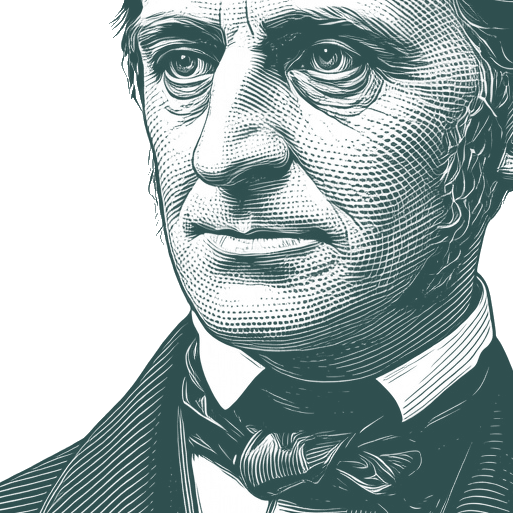
This is the history of governments, - one man does something which is to bind another. A man who cannot be acquainted with me, taxes me; looking from… - Ralph Waldo Emerson
""
This is the history of governments, - one man does something which is to bind another. A man who cannot be acquainted with me, taxes me; looking from afar at me, ordains that a part of my labour shall go to this or that whimsical end, not as I, but as he happens to fancy. Behold the consequence. Of all debts, men are least willing to pay the taxes. What a satire is this on government! Everywhere they think they get their money's worth, except for these. Hence, the less government we have, the better, - the fewer laws, and the less confided power. The antidote to this abuse of formal Government, is, the influence of private character, the growth of the Individual; the appearance of the principal to supersede the proxy; the appearance of the wise man, of whom the existing government, is, it must be owned, but a shabby imitation. That which all things tend to educe, which freedom, cultivation, intercourse, revolutions, go to form and deliver, is character; that is the end of nature, to reach unto this coronation of her king. To educate the wise man, the State exists; and with the appearance of the wise man, the State expires. The appearance of character makes the State unnecessary. The wise man is the State. He needs no army, fort, or navy, - he loves men too well; no bribe, or feast, or palace, to draw friends to him; no vantage ground, no favourable circumstance. He needs no library, for he has not done thinking; no church, for he is a prophet; no statute book, for he has the lawgiver; no money, for he is value; no road, for he is at home where he is; no experience, for the life of the creator shoots through him, and looks from his eyes. He has no personal friends, for he who has the spell to draw the prayer and piety of all men unto him, needs not husband and educate a few, to share with him a select and poetic life. His relation to men is angelic; his memory is myrrh to them; his presence, frankincense and flowers.
Tis the good reader that makes the good book; a good head cannot read amiss: in every book he finds passages which seem confidences or asides hidden from all else and unmistakably meant for his ear.
We have such exorbitant eyes, that on seeing the smallest arc, we complete the curve, and when the curtain is lifted from the diagram which it seemed to veil, we are vexed to find that no more was drawn, than just that fragment of an arc which we first beheld. We are greatly too liberal in our construction of each other's faculty and promise. Exactly what the parties have already done, they shall do again; but that which we inferred from their nature and inception, they will not do. That is in nature, but not in them.
Works in ChatGPT, Claude, or Any AI
Add semantic quote search to your AI assistant via MCP. One command setup.