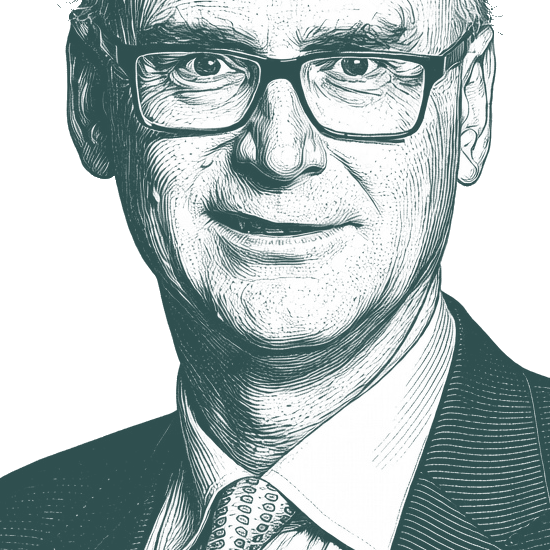
In Bletchley, in Britain, in 1943, in total secrecy, a brilliant mathematician, Alan Turing, is seeing his most incisive insight turned into physical… - Matt Ridley
""
In Bletchley, in Britain, in 1943, in total secrecy, a brilliant mathematician, Alan Turing, is seeing his most incisive insight turned into physical reality. Turing has argued that numbers can compute numbers. To crack the Lorentz encoding machines of the German forces, a computer called Colossus has been built based on Turing’s principles: it is a universal machine with a modifiable stored program. Nobody realises it at the time, least of all Turing, but he is probably closer to the mystery of life than anybody else. Heredity is a modifiable stored program; metabolism is a universal machine. The recipe that links them is a code, an abstract message that can be embodied in a chemical, physical or even immaterial form. Its secret is that it can cause itself to be replicated. Anything that can use the resources of the world to get copies of itself made is alive; the most likely form for such a thing to take is a digital message — a number, a script or a word.
English
Collect this quote
About
Matt Ridley
Matthew White Ridley, 5th Viscount Ridley, DL, FRSL, FMedSci (born 7 February 1958), usually known as Matt Ridley, is a British journalist who has written several popular science books. He is also a businessman and a Conservative member of the House of Lords.
Alternative Names:
Matthew Ridley, 5th Viscount Ridley
•
Hon. Matthew White Ridley
•
Matthew White Ridley, 5th Viscount Ridley
•
Dr M W Ridley
•
Matthew White Ridley
Specialisation, accompanied by exchange, is the source of economic prosperity. Here, in my own words, is what a modern version of Smithism claims. First, the spontaneous and voluntary exchange of goods and services leads to a division of labour in which people specialise in what they are good at doing. Second, this in turn leads to gains from trade for each party to a transaction, because everybody is doing what he is most productive at and has the chance to learn, practise and even mechanise his chosen task. Individuals can thus use and improve their own tacit and local knowledge in a way that no expert or ruler could. Third, gains from trade encourage more specialisation, which encourages more trade, in a virtuous circle. The greater the specialisation among producers, the greater is the diversification of consumption: in moving away from self-sufficiency people get to produce fewer things, but to consume more. Fourth, specialisation inevitably incentivises innovation, which is also a collaborative process driven by the exchange and combination of ideas. Indeed, most innovation comes about through the recombination of existing ideas for how to make or organise things. The more people trade and the more they divide labour, the more they are working for each other. The more they work for each other, the higher their living standards. The consequence of the division of labour is an immense web of cooperation among strangers: it turns potential enemies into honorary friends. A woollen coat, worn by a day labourer, was (said Smith) ‘the produce of a great multitude of workmen. The shepherd, the sorter of the wool, the wool-comber or carder, the dyer, the scribbler, the spinner, the weaver, the fuller, the dresser . . .’ In parting with money to buy a coat, the labourer was not reducing his wealth. Gains from trade are mutual; if they were not, people would not voluntarily engage in trade. The more open and free the market, the less opportunity there is for exploitation
Such “habituation” is just a property of the way brains work; our senses, and those of grackles, notice novelty and change, not steady states. The female preference did not evolve: it just is that way.
Enhance Your Quote Experience
Enjoy ad-free browsing, unlimited collections, and advanced search features with Premium.