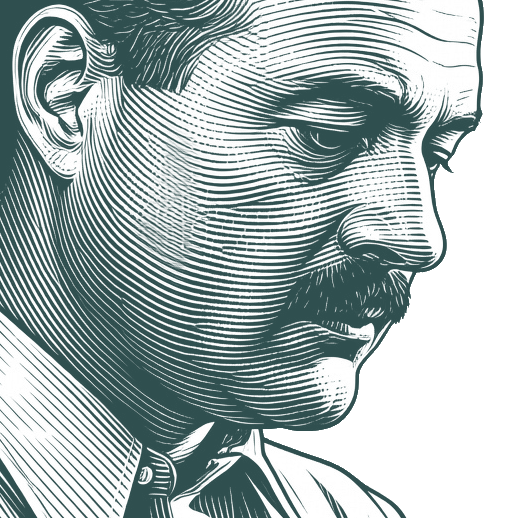
Ernest Miller Hemingway (21 July 1899 – 2 July 1961) was an American novelist, short story writer, and journalist. His economical and understated style had a strong influence on 20th-century fiction, while his life of adventure and his public image influenced later generations. Hemingway produced most of his work between the mid-1920s and the mid-1950s, and won the Nobel Prize in Literature in 1954. He published seven novels, six short story collections, and two non-fiction works. Additional works, including three novels, four short story collections, and three non-fiction works, were published posthumously. Many of his works are considered classics of American literature.
Biography information from
Wikiquote·
Portrait adapted from
Wikimedia Commons, Lloyd Arnold (Public domain / CC0)
Also Known As
Native Name:
Ernest Miller Hemingway
Also Known As:Papa
Alternative Names:
Hemingway
•
Ernest Miller Hemmingway
•
E. M. Hemmingway
•
E. Hemmingway
•
E. Hemingway
•
Ernest M. Hemingway
You did not kill the fish only to keep alive and to sell for food, he thought. You killed him for pride and because you are a fisherman. You loved him when he was alive and you loved him after. If you love him, it is not a sin to kill him. Or is it more?
All a man has is pride. Sometimes you have it so much it is a sin. We have all done things for pride that we knew were impossible. We didn't care. But a man must implement his pride with intelligence and care.
Dying was nothing and he had no picture of it nor fear of it in his mind. But living was a field of grain blowing in the wind on the side of a hill. Living was a hawk in the sky. Living was an earthen jar of water in the dust of the threshing with the grain flailed out and the chaff blowing. Living was a horse between your legs and a carbine under one leg and a hill and a valley and a stream with trees along it and the far side of the valley and the hills beyond.