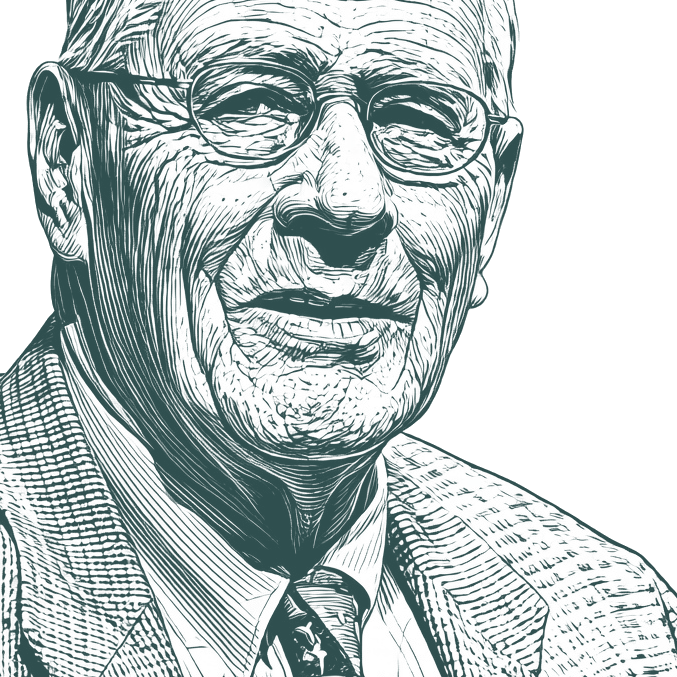
Stephen Edward Ambrose (January 10, 1936 – October 13, 2002) was an American historian, academic, and author, most noted for his books on World War II and his biographies of U.S. presidents Dwight D. Eisenhower and Richard Nixon. He was a longtime professor of history at the University of New Orleans and the author of many bestselling volumes of American popular history. In 2002, several instances of plagiarism were discovered in his books. In 2010, after his death, Ambrose was found to have fabricated interviews and events in his biographies of Eisenhower.
Biography information from
Wikipedia·
Portrait adapted from
Wikimedia Commons, Jim Wallace (Smithsonian Institution) (CC BY)
"The German today is like the June Bride. He knows he is going to get it, but he doesn't know how big it is going to be".
Were I to describe the blessings I desire in life, I would be happy in a few but faithful friends. Might I choose my talent, it should rather be good than learning. I would consult in the choice of my house, convenience rather than state; and, for my circumstances, desire a moderate but independent fortune. Business enough to secure me from indolence, and leisure enough always to have an hour to spare. I would have no master, and I desire few servants. I would not be led away by ambition, nor perplexed with disputes. I would enjoy the blessings of health but rather be beholden for it to a regular life and an easy mind, than to the school of Hippocrates. As to my passions, since we cannot be wholly divested of them, I would hate only those whose manners rendered them odious, and love only where I knew
PREMIUM FEATURE
Advanced Search Filters
Filter search results by source, date, and more with our premium search tools.
Army was boring, unfeeling, and chicken, and hated it. They found combat to be ugliness, destruction, and death, and hated it. Anything was better than the blood and carnage, the grime and filth, the impossible demands made on the body — anything, that is, except letting down their buddies. They also found in combat the closest brotherhood they ever knew. They found selflessness. They found they could love the other guy in their foxhole more than themselves. They found that in war, men who loved life would give their lives for them.