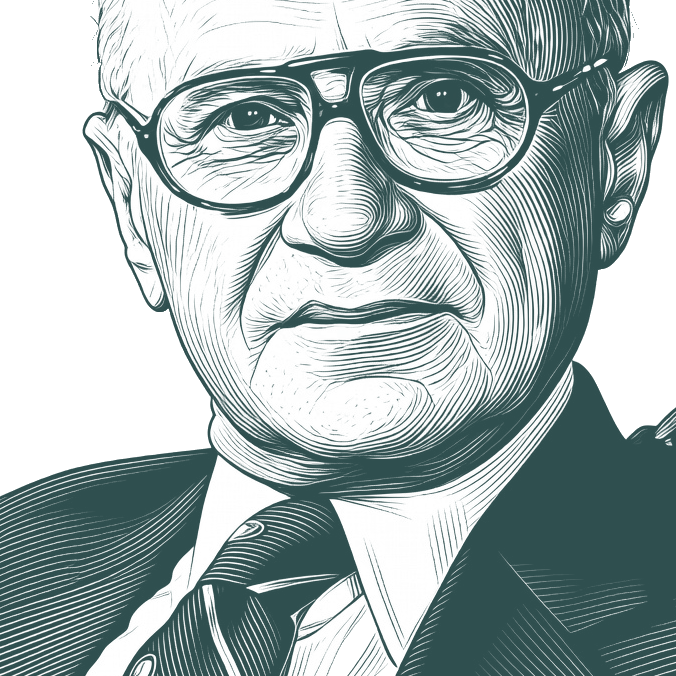
The preservation of freedom is the protective reason for limiting and decentralizing governmental power. But there is also a constructive reason. The… - Milton Friedman
""
The preservation of freedom is the protective reason for limiting and decentralizing governmental power. But there is also a constructive reason. The great advances of civilization, whether in architecture or painting, in science or literature, in industry or agriculture, have never come from centralized government. … Government can never duplicate the variety and diversity of individual action.
Milton Friedman (31 July 1912 – 16 November 2006) was an American economist noted for his support for free markets and a reduction in the size of government. In 1976 he was awarded a Nobel Prize in Economics.
Biography information from
Wikiquote·
Portrait adapted from
Wikimedia Commons, Bachrach Studios (Public domain / CC0)
The “something” that connects the two transactions is called money, and it has taken innumerable physical forms — from stones to feathers to tobacco to shells to copper, silver, and gold to pieces of paper and entries in ledger books. Who knows what will be the future incarnations of money? Computer bytes?
The only way that has ever been discovered to have a lot of people cooperate together voluntarily is through the free market. And that’s why it’s so essential to preserving individual freedom.
Legalizing drugs would simultaneously reduce the amount of crime and raise the quality of law enforcement.