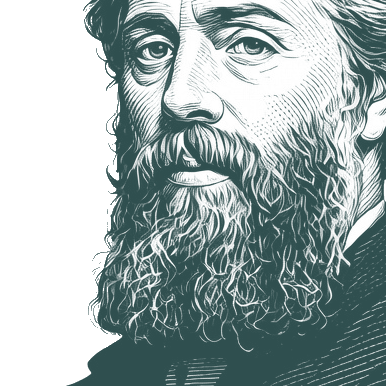
Give not thyself up, then, to fire, lest it invert thee, deaden thee; as for the time it did me. There is a wisdom that is woe; but there is a woe th… - Herman Melville
""
Give not thyself up, then, to fire, lest it invert thee, deaden thee; as for the time it did me. There is a wisdom that is woe; but there is a woe that is madness. And there is a Catskill eagle in some souls that can alike dive down into the blackest gorges, and soar out of them again and become invisible in the sunny spaces. And even if he for ever flies within the gorge, that gorge is in the mountains; so that even in his lowest swoop the mountain eagle is still higher than other birds upon the plain, even though they soar.
Herman Melville (1 August 1819 – 28 September 1891) was an American novelist, essayist, short story writer, and poet of the American Renaissance period.
Biography information from
Wikiquote·
Portrait adapted from
Wikimedia Commons, Joseph Oriel Eaton (Public domain / CC0)
Also Known As
Alternative Names:
Hermann Melville
•
Herman Melvill
Related quotes. More quotes will automatically load as you scroll down, or you can use the load more buttons.
Shorter versions of this quote
Give not thyself up, then, to fire, lest it invert thee, deaden thee, as for the time it did me. There is a wisdom that is woe; but there is a woe that is madness.
With much interest I sat watching him. Savage though he was, and hideously marred about the face — at least to my taste — his countenance yet had something in it which was by no means disagreeable. You cannot hide the soul. Through all his unearthly tattooings, I thought I saw the traces of a simple honest heart; and in his large, deep eyes, fiery black and bold, there seemed tokens of a spirit that would dare a thousand devils. And besides all this, there was a certain lofty bearing about the Pagan, which even his uncouthness could not altogether maim. He looked like a man who had never cringed and never had had a creditor.
Is Ahab, Ahab? Is it I, God, or who, that lifts this arm? But if the great sun move not of himself; but is an errand-boy in heaven; nor one single star can revolve, but by some invisible power; how then can this one small heart beat; this one small brain think thoughts; unless God does that beating, does that thinking, does that living, and not I.
ومثلما أن أطفال الآدميين يحدقون في هدوء وثبات بعيدا عن الثدي وهم يرضعون كأنما يحيون حياتين في آن معا - فبينما هم يمتكون الغذاء الجسدي ما يزالون روحيا يستطيبون ذكريات غير أرضية - كذلك كان يفعل صغار أولئك الحيتان، كانوا كأنما ينظرون نحونا إلى أعلى ولكنهم لا ينظروننا، كأننا عشبة من أعشاب الخليج في أنظارهم الوليدة الحديثة العهد بالنظر.