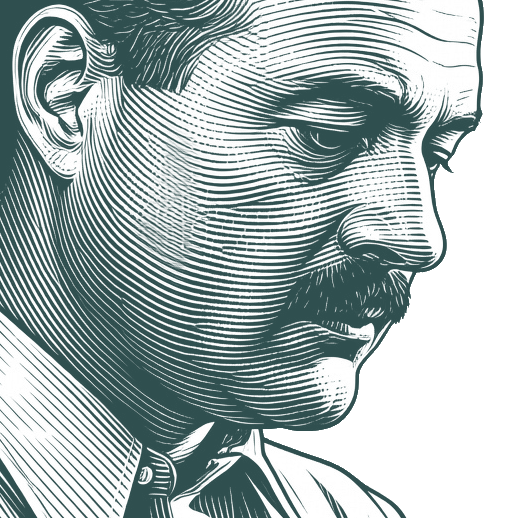
Cowardice, as distinguished from panic, is almost always simply a lack of ability to suspend the functioning of the imagination. - Ernest Hemingway

" "

Cowardice, as distinguished from panic, is almost always simply a lack of ability to suspend the functioning of the imagination.

English
Collect this quote

About Ernest Hemingway

Ernest Miller Hemingway (21 July 1899 – 2 July 1961) was an American novelist, short story writer, and journalist. His economical and understated style had a strong influence on 20th-century fiction, while his life of adventure and his public image influenced later generations. Hemingway produced most of his work between the mid-1920s and the mid-1950s, and won the Nobel Prize in Literature in 1954. He published seven novels, six short story collections, and two non-fiction works. Additional works, including three novels, four short story collections, and three non-fiction works, were published posthumously. Many of his works are considered classics of American literature.

Biography information from Wikiquote

Also Known As

Native Name: Ernest Miller Hemingway
Also Known As: Papa
Alternative Names: Hemingway Ernest Miller Hemmingway E. M. Hemmingway E. Hemmingway E. Hemingway Ernest M. Hemingway
Works in ChatGPT, Claude, or Any AI

Add semantic quote search to your AI assistant via MCP. One command setup.

Related quotes. More quotes will automatically load as you scroll down, or you can use the load more buttons.

Additional quotes by Ernest Hemingway

Things may not be immediately discernible in what a man writes, and in this sometimes he is fortunate; but eventually they are quite clear and by these and the degree of alchemy that he possesses he will endure or be forgotten. Writing, at its best, is a lonely life. Organizations for writers palliate the writer's loneliness but I doubt if they improve his writing. He grows in public stature as he sheds his loneliness and often his work deteriorates. For he does his work alone and if he is a good enough writer he must face eternity, or the lack of it, each day. For a true writer each book should be a new beginning where he tries again for something that is beyond attainment. He should always try for something that has never been done or that others have tried and failed. Then sometimes, with great luck, he will succeed.

Later he had seen the things that he could never think of and later still he had seen much worse.

Try QuoteGPT

Chat naturally about what you need. Each answer links back to real quotes with citations.

This too to remember. If a man writes clearly enough any one can see if he fakes. If he mystifies to avoid a straight statement, which is very different from breaking so-called rules of syntax or grammar to make an efffect which can be obtained in no other way, the writer takes a longer time to be known as a fake and other writers who are afflicted by the same necessity will praise him in their own defense. True mysticism should not be confused with incompetence in writing which seeks to mystify where there is no mystery but is really only the necessity to fake to cover lack of knowledge or the inability to state clearly. Mysticism implies a mystery and there are many mysteries; but incompetence is not one of them; nor is overwritten journalism made literature by the injection of a false epic qulaity. Remember this too: all bad writers are in love with the epic.

Loading...