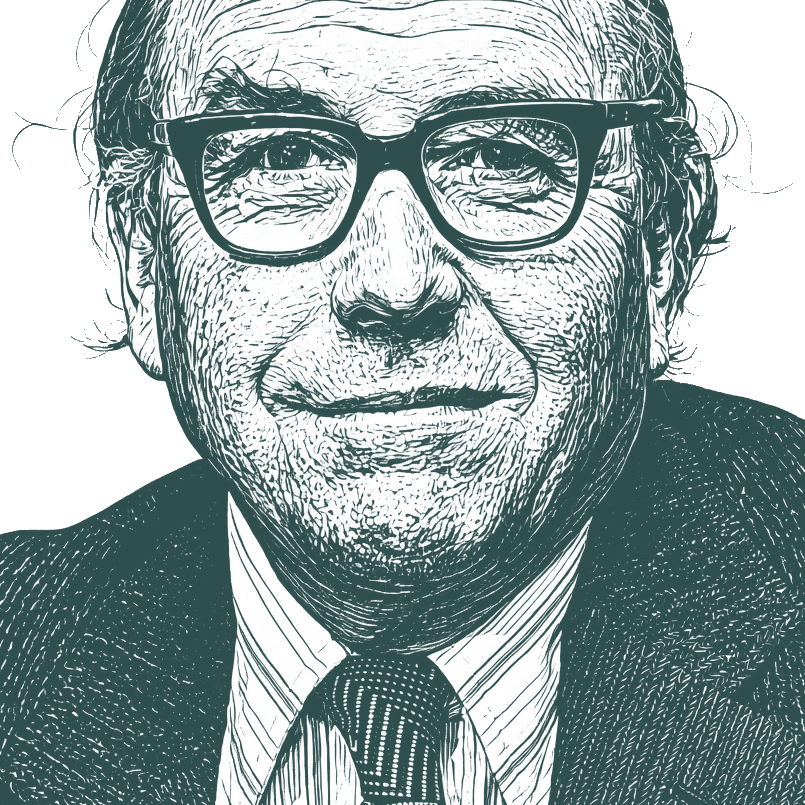
There has always been a left, an extreme left, in the Labour Party. ... there is now more of an attempt, patchy, but an attempt by extremist organiza… - Roy Jenkins
""
There has always been a left, an extreme left, in the Labour Party. ... there is now more of an attempt, patchy, but an attempt by extremist organizations to infiltrate and work through the Labour Party at the present time—the phrase is 'entryism'. It is something which is certainly there and which one certainly has to beware of.
Roy Harris Jenkins, Baron Jenkins of Hillhead OM PC (11 November 1920 – 5 January 2003) was a British politician who served as the sixth president of the European Commission from 1977 to 1981, having previously been one of the primary proponents of British entry into the European Economic Community. At various times a Member of Parliament (MP) for the Labour Party, Social Democratic Party (SDP) and the Liberal Democrats, he was Chancellor of the Exchequer and Home Secretary under the Wilson and Callaghan Governments. He initially identified as a democratic socialist, and later as a social democrat and centrist. As Chancellor of the Exchequer, he pursued a tight fiscal policy to control the inflation of the pound sterling. As Home Secretary, he was responsible for abolishing capital punishment and decriminalizing abortion, homosexuality, and divorce. He ran in the 1976 Labour Party leadership election to become Prime Minister, but was defeated by James Callaghan and briefly retired from British politics to serve as President of the European Commission. He returned to Britain to help found the Social Democratic Party, which formed an alliance with the Liberal Party under David Steel and was intended as a centrist alternative to the Conservative Party under Margaret Thatcher and the Labour Party under Michael Foot. However, he resigned as Party Leader after the SDP-Liberal Alliance failed to outpoll the Labour Party in the 1983 general election.
The myths about the evils of the [European] Community grow ever more manifold as day passes day. We are told that it would prevent any advance of public ownership. What happened to British Leyland during the past two days? The truth is almost the reverse. It is not the change of ownership which is threatened by staying in, it is the basic plan for buttressing and rejuvenating British Leyland and saving the jobs which go with it which would be fatally undermined by coming out.
Do we really believe that we have been more effectively and coherently governed over the past two decades than have the Germans, with their very sensible system of proportional representation? The avoidance of incompatible coalitions? Do we really believe that the last Labour Government was not a coalition, in fact if not in name, and a pretty incompatible one at that? I served in it for half its life, and you could not convince me of anything else.
Go Premium
Support Quotewise while enjoying an ad-free experience and premium features.
It would be a mistake to think...that by what we are doing tonight we are giving a vote of confidence or congratulation to homosexuality. Those who suffer from this disability carry a great weight of loneliness, guilt and shame. The crucial question, which we are nearly at the end of answering decisively, is, should we add to those disadvantages the full rigour of the criminal law? By its overwhelming decisions, the House has given a fairly clear answer, and I hope that the Bill will now make rapid progress towards the Statute Book. It will be an important and civilising Measure.