"This has been a novel about some people who were punished entirely too much for what they did. They wanted to have a good time, but they were like c… - Philip K. Dick
"This has been a novel about some people who were punished entirely too much for what they did. They wanted to have a good time, but they were like children playing in the street; they could see one after another of them being killed — run over, maimed, destroyed — but they continued to play anyhow. We really all were very happy for a while, sitting around not toiling but just bullshitting and playing, but it was for such a terrible brief time, and then the punishment was beyond belief: even when we could see it, we could not believe it. For example, while I was writing this I learned that the person on whom the character Jerry Fabin is based killed himself. My friend on whom I based the character Ernie Luckman died before I began the novel. For a while I myself was one of these children playing in the street; I was, like the rest of them, trying to play instead of being grown up, and I was punished. I am on the list below, which is a list of those to whom this novel is dedicated, and what became of each. Drug misuse is not a disease, it is a decision, like the decision to step out in front of a moving car. You would call that not a disease but an error in judgment. When a bunch of people begin to do it, it is a social error,a life-style. In this particular life-style the motto is "Be happy now because tomorrow you are dying," but the dying begins almost at once, and the happiness is a memory. It is, then, only a speeding up, an intensifying, of the ordinary human existence. It is not different from your life-style, it is only faster. It all takes place in days or weeks or months instead of years. "Take the cash and let the credit go," as Villon said in 1460. But that is a mistake if the cash is a penny and the credit a whole lifetime. There is no moral in this novel; it is not bourgeois; it does not say they were wrong to play when they should have toiled;it just tells what the consequences were. In Greek drama they were beginning, as a society, to discover science
Philip Kindred Dick (16 December 1928 – 2 March 1982) was an American writer, whose published works mainly belong to the genre of science fiction. Dick explored philosophical, sociological and political themes in novels with plots dominated by monopolistic corporations, authoritarian governments, and altered states of consciousness. In his later works, Dick's thematic focus tended to reflect his personal interest in metaphysics and theology.
Biography information from
Wikiquote·
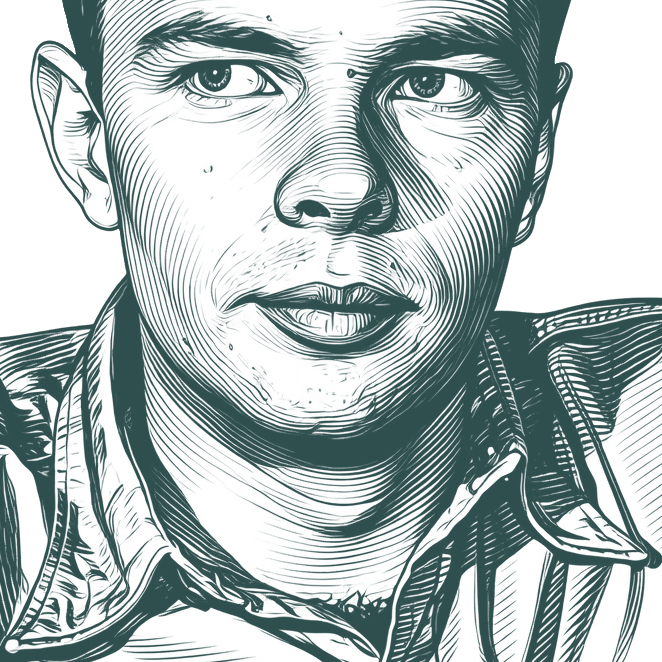
Portrait adapted from
Wikimedia Commons, Arthur Knight (photographer) (Public domain / CC0)
Also Known As
Pen Names:
Richard Phillipps
•
Jack Dowland
Birth Name:
Philip Kindred Dick
Also Known As:Phil
Alternative Names:
PKD
•
Philip Dick
•
Richard Phillips
•
Filip K. Dik
Related quotes. More quotes will automatically load as you scroll down, or you can use the load more buttons.
Shorter versions of this quote
They wanted to have a good time, but they were like children playing in the street; they could see one after another of them being killed — run over, maimed, destroyed — but they continued to play anyhow.
They wanted to have a good time, but they were like children playing in the street; they could see one after another of them being killed—run over, maimed, destroyed—but they continued to play anyhow.
The frogs hopping indoors agree that we are on a prison planet. They themselves are frog criminals that were convicted of doing frog crimes.
They know a million tricks, those novelists. Take Doctor Goebbels; that's how he started out, writing fiction. Appeals to the base lusts that hide in everyone no matter how respectable on the surface. Yes, the novelist knows humanity, how worthless they are, ruled by their testicles, swayed by cowardice, selling out every cause because of their greed - all he's got to do is thump on the drum, and there's his response. And he's laughing, of course, behind his hand at the effect he gets.
Try QuoteGPT
Chat naturally about what you need. Each answer links back to real quotes with citations.
Another fantasy film rolled suddenly into his head, without his consent: