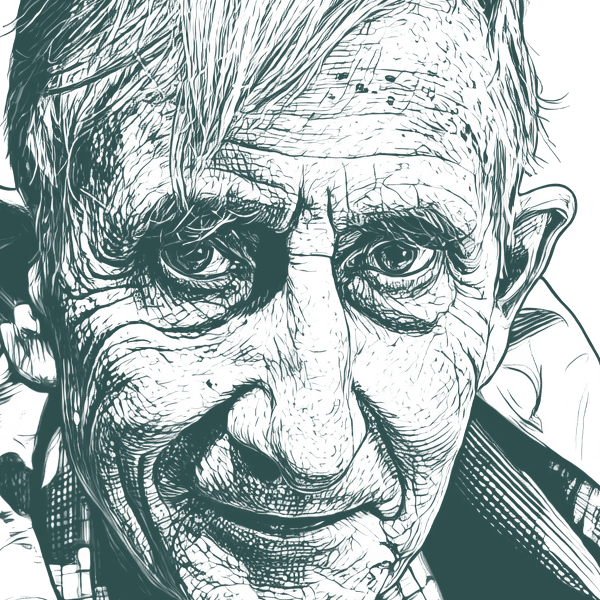
The principle of maximum diversity says that the laws of nature, and the initial conditions at the beginning of time, are such as to make the univers… - Freeman Dyson
""
The principle of maximum diversity says that the laws of nature, and the initial conditions at the beginning of time, are such as to make the universe as interesting as possible. As a result, life is possible but not too easy. Maximum diversity often leads to maximum stress. In the end we survive, but only by the skin of our teeth. This is the confession of faith of a scientific heretic. Perhaps I may claim as evidence for progress in religion the fact that we no longer burn heretics.
Freeman John Dyson (15 December 1923 – 28 February 2020) was an English-born American physicist, mathematician, and futurist, famous for his work in quantum mechanics, nuclear weapons design and policy, and the search for extraterrestrial intelligence. He was the winner of the Templeton Prize in the year 2000.
The gospel of St. Matthew told of the angry Jesus driving the merchants and money-changers out of the temple, knocking over the tables of the money-changers and spilling their coins on the floor. Jesus was not opposed to capitalism and the profit motive, so long as economic activities were carried on outside the temple. In the parable of the talents, he praises the servant who used his master's money to make a profitable investment, and condemns the servant who was too timid to invest. But he draws a clear line at the temple door. Inside the temple, the ground belongs to God and profit-making must stop.
Unfortunately a large number of people in many countries are strongly opposed to green technology, for reasons having little to do with the real dangers. It is important to treat the opponents with respect, to pay attention to their fears, to go gently into the new world of green technology so that neither human dignity nor religious conviction is violated. If we can go gently, we have a good chance of achieving within a hundred years the goals of ecological sustainability and social justice that green technology brings within our reach.
PREMIUM FEATURE
Advanced Search Filters
Filter search results by source, date, and more with our premium search tools.
Nobody knows what dark matter is. It is another deep mystery waiting to be explored. We know only that it is there, and that it weighs more than the stuff that we can see.