Everyone who has seen the recent news reports has been shocked and moved by the suffering children in Sarajevo. At the end of last week, we told the United Nations High Commissioner for Refugees that we stood ready to evacuate children from Sarajevo to the United Kingdom for medical treatment, or to send medical teams to Yugoslavia to provide treatment on the spot. If it is possible to treat the children on the spot, near to their families, with people around them who speak their language and in relatively familiar surroundings, that is obviously the best way. We have told the International Red Cross that we are willing to fly out medical personnel at very short notice if needed. I hope to meet the United Nations High Commissioner for Refugees in London later this week to see what further action is needed.
former prime minister of the United Kingdom (born 1943)
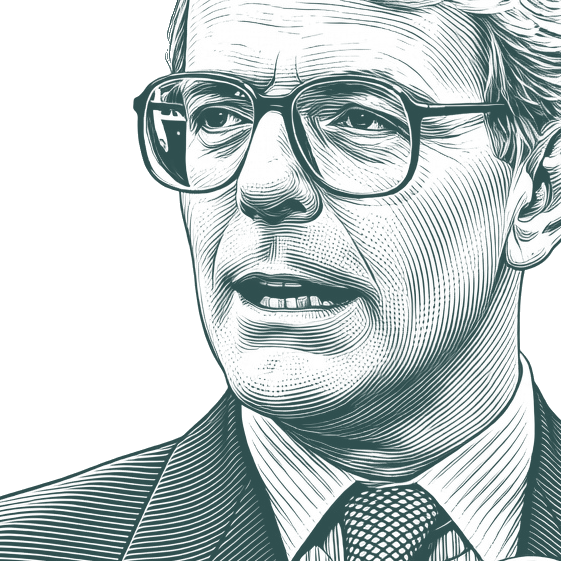
Sir John Major (born 29 March 1943) is a British politician who served as Prime Minister from 1990 to 1997. His childhood was spent in Brixton after his father's business failed, and he left school at 16. He worked for Standard Chartered Bank and became a councillor in Lambeth in 1968. He was elected to Parliament in 1979 and was a Cabinet Minister under Margaret Thatcher before being elected as her successor. After his defeat by Tony Blair's Labour Party in 1997, he retired as Leader of the Conservative Party in favor of William Hague and left the House of Commons at the 2001 general election.
From: Wikiquote (CC BY-SA 4.0)
From Wikidata (CC0)
Works in ChatGPT, Claude, or Any AI
Add semantic quote search to your AI assistant via MCP. One command setup.
Robert Hughes (Labour MP for Aberdeen North): With regard to the Prime Minister's desire for a classless society and social mobility, will he explain why there are no women in his Cabinet, or is the only woman in his Cabinet the back-seat driver?
John Major: In recent years, in all aspects of life in this country, women have been taking a higher profile: in the law, in commerce, in the civil service, in industry and in politics – and that will continue. As those women would wish it to be, they will reach the top on merit – oh yes, and if the hon. Gentleman is patient, he will find women aplenty in top positions in my Government. Indeed, if he had waited awhile, perhaps even to the end of today, he would not have asked that question.
George Foulkes: Will the Prime Minister tell us what word he would legitimately use to describe those Cabinet Ministers who, while professing loyalty to him, are setting up telephone lines in campaign offices for the second round of the election?
John Major: I have no knowledge of that. I can say that the speed at which these matters can be done is a tribute to privatisation.
Nationalism is authoritarian. It turns easily towards autocracy or – at worst – outright dictatorship. Nationalists hide their threat under an exaggerated love of country, an unthinking patriotism: “my country, right or wrong”. Its leaders view other countries – and sometimes other races – as inferior. [...] There is a great difference between nationalism and patriotism. Patriotism is more than pride in country. A mature patriotism concerns itself with the condition of the people, as well as the prestige of the country. Such a patriotism worries about deprivation, opportunity and incentive. It asks itself: how can we spread our wealth and opportunity more evenly around our country? And it is as concerned with the growth of food banks as it is with a shortage of aircraft carriers.
The protocol is a mess. It was very poorly negotiated [...] I think some of the promises made after the protocol that there would be no checks on trade from Britain and Northern Ireland, how those promises came to be made I cannot imagine because they were patently wrong. The protocol needs changing. I am baffled as to how we could have reached a situation where that protocol was accepted.
John Major: What I don't understand, Michael, is why such a complete wimp like me keeps winning everything.
Michael Brunson: You've said it, you said precisely that.
Major: I suppose Gus will tell me off for saying that, won't you Gus?
Brunson: No, no, no … it's a fair point. The trouble is that people are not perceiving you as winning.
Major: Oh, I know … why not? Because ...
Brunson: Because rotten sods like me, I suppose, don't get the message clear [laughs].
Major: No, no, no. I wasn't going to say that - well partly that, yes, partly because of S-H-one-Ts like you, yes, that's perfectly right. But also because those people who are opposing our European policy have said the way to oppose the Government on the European policy is to attack me personally. The Labour Party started before the last election. It has been picked up and it is just one of these fashionable things that slips into the Parliamentary system and it is an easy way to proceed.
Brunson: But I mean you … has been overshadowed … my point is there, not just the fact that you have been overshadowed by Maastricht and people don't ...
Major: The real problem is this ...
Brunson: But you've also had all the other problems on top - the Mellors, the Mates … and it's like a blanket - you use the phrase 'masking tape' but I mean that's it, isn't it?
Major: Even, even, even, as an ex-whip I can't stop people sleeping with other people if they ought not, and various things like that. But the real problem is ...
Brunson: I've heard other people in the Cabinet say 'Why the hell didn't he get rid of Mates on Day One?' Mates was a fly, you could have swatted him away.
Major: Yeah, well, they did not say that at the time, I have to tell you. And I can tell you what they would have said if I had. They'd have said 'This man was being set up. He was trying to do his job for his constituent. He had done nothing improper, as the Cabinet Secretary told me. It was an act of gross injustice to have got rid of him'. Nobody knew what I knew at the time. But the real problem is that one has a tiny majority. Don't overlook that. I could have all these clever and decisive things that people wanted me to do and I would have split the Conservative Party into smithereens. And you would have said, Aren't you a ham-fisted leader? You've broken up the Conservative Party.
Brunson: No, well would you? If people come along and ...
Major: Most people in the Cabinet, if you ask them sensibly, would tell you that, yes. Don't underestimate the bitterness of European policy until it is settled - It is settled now.
Brunson: Three of them - perhaps we had better not mention open names in this room - perhaps the three of them would have - if you'd done certain things, they would have come along and said, 'Prime Minister, we resign'. So you say 'Fine, you resign'.
Major: We all know which three that is. Now think that through. Think it through from my perspective. You are Prime Minister. You have got a majority of 18. You have got a party still harking back to a golden age that never was but is now invented. And you have three rightwing members of the Cabinet actually resigned. What happens in the parliamentary party?
Brunson: They create a lot of fuss but you have probably got three damn good ministers in the Cabinet to replace them.
Major: Oh, I can bring in other people into the Cabinet, that is right, but where do you think most of this poison has come from? It is coming from the dispossessed and the never-possessed. You and I can both think of ex-ministers who are going around causing all sorts of trouble. Would you like three more of the bastards out there? What's the Lyndon Johnson, er, maxim?
Brunson: If you've got them by the balls their hearts and minds will follow.
Major: No, that's not what I had in mind, though it's pretty good.
I have been a Member of Parliament for 18 years. I have been a member of the Government for 14 years, of the Cabinet for ten years and Prime Minister since 1990. When the curtain falls it is time to get off the stage and that is what I propose to do. I shall, therefore, advise my parliamentary colleagues that it would be appropriate for them to consider the selection of a new leader of the Conservative Party to lead the party through Opposition through the years that lie immediately ahead.