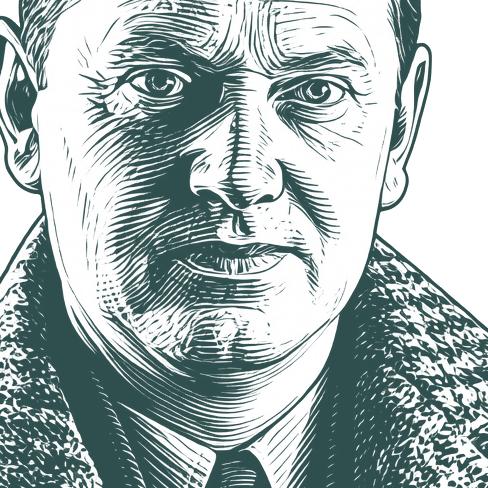
Arthur Evelyn St. John Waugh (28 October 1903 – 10 April 1966) was an English writer of novels, biographies, and travel books; he was also a prolific journalist and book reviewer. His most famous works include the early satires Decline and Fall (1928) and A Handful of Dust (1934), the novel Brideshead Revisited (1945), and the Second World War trilogy Sword of Honour (1952–1961). He is recognised as one of the great prose stylists of the English language in the 20th century.
Biography information from
Wikiquote·
Portrait adapted from
Wikimedia Commons, Carl Van Vechten (1880–1964) (Public domain / CC0)
Also Known As
Alternative Names:
Evelyn Arthur St John Waugh
•
Arthur Evelyn St. John Waugh
She seemed to say "Look at me. I have done my share. I am beautiful. It is something quite out of the ordinary, this beauty of mine. I am made for delight. But what do I get out of it? Where is my reward?"<p>That was the change in her from ten years ago; that, indeed, was her reward, this haunting, this magical sadness which spoke straight to the heart and struck silence; it was the completion of her beauty."
I haven't been to sleep for over a year. That's why I go to bed early. One needs more rest if one doesn't sleep.
Enhance Your Quote Experience
Enjoy ad-free browsing, unlimited collections, and advanced search features with Premium.
But I had no patience with this convent chatter. I had felt the brush take life in my hand that afternoon; I had had my finger in the great, succulent pie of creation. I was a man of the Renaissance that evening- of Browning's renaissance. I, who had walked the streets of Rome in Genoa velvet and had seen the stars through Galileo's tube, spurned the friars, with their dusty tomes, and their sunken, jealous eyes and their crabbed hair-splitting speech.