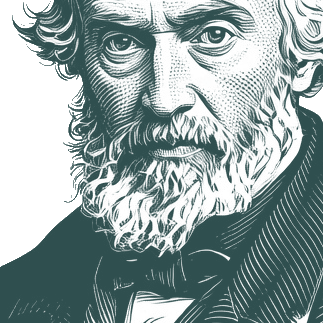
Clearness, emphatic clearness, was his highest category of man's thinking power. He delighted always to hear good argument. He would often say, I wou… - Thomas Carlyle
""
Clearness, emphatic clearness, was his highest category of man's thinking power. He delighted always to hear good argument. He would often say, I would like to hear thee argue with him." He said this of Jeffrey and me, with an air of such simple earnestness, not two years ago (1830), and it was his true feeling. I have often pleased him much by arguing with men (as many years ago I was prone to do) in his presence. He rejoiced greatly in my success, at all events in my dexterity and manifested force. Others of us he admired for our "activity," our practical valor and skill, all of us (generally speaking) for our decent demeanor in the world. It is now one of my greatest blessings (for which I would thank Heaven from the heart) that he lived to see me, through various obstructions, attain some look of doing well. He had "educated" me against much advice, I believe, and chiefly, if not solely, from his own noble faith. James Bell, one of our wise men, had told him, "Educate a boy, and he grows up to despise his ignorant parents." My father once told me this, and added, "Thou hast not done so; God be thanked for it." I have reason to think my father was proud of me (not vain, for he never, except when provoked, openly bragged of us); that here too he lived to see the pleasure of the Lord prosper in his hands. Oh, was it not a happiness for me! The fame of all this planet were not henceforth so precious.
English
Collect this quote
About
Thomas Carlyle
Thomas Carlyle (December 4 1795 – February 5 1881) was a Scottish essayist, historian and philosopher of great prominence during the Victorian era. His wife was Jane Welsh Carlyle.
Biography information from
Wikiquote·
Portrait adapted from
Wikimedia Commons, Sir John Everett Millais, 1st Bt (died 1896) (Public domain / CC0)
Or indeed we may say again, it is in what I called Portrait-painting, delineating of men and things, especially of men, that Shakspeare is great. All the greatness of the man comes out decisively here. It is unexampled, I think, that calm creative perspicacity of Shakspeare. The thing he looks at reveals not this or that face of it, but its inmost heart and generic secret: it dissolves itself as in light before him, so that he discerns the perfect structure of it. Creative, we said: poetic creation, what is this too but seeing the thing sufficiently? The word that will describe the thing, follows of itself from such clear intense sight of the thing. And is not Shakspeare's morality, his valour, candour, tolerance, truthfulness; his whole victorious strength and greatness, which can triumph over such obstructions, visible there too? Great as the world!
In the meanest mortal there lies something nobler. The poor swearing soldier, hired to be shot, has his "honor of a soldier," different from drill-regulations and the shilling a day. It is not to taste sweet things, but to do noble and true things, and vindicate himself under God's Heaven as a god-made Man, that the poorest son of Adam dimly longs. Show him the way of doing that, the dullest day-drudge kindles into a hero. They wrong man greatly who say he is to be seduced by ease.
Works in ChatGPT, Claude, or Any AI
Add semantic quote search to your AI assistant via MCP. One command setup.
You may take my purse; but I cannot have my moral Self annihilated. The purse is any Highwayman's who might meet me with a loaded pistol: but the Self is mine and God my Maker's; it is not yours; and I will resist you to the death, and revolt against you ...