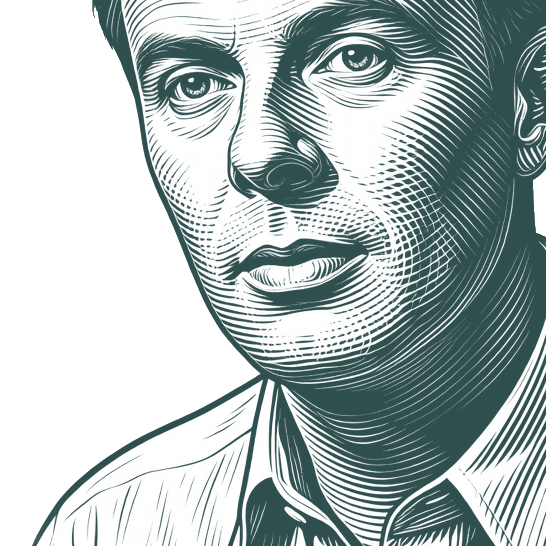
I'm pretty good at inventing phrases- you know, the sort of words that suddenly make you jump, almost as though you'd sat on a pin, they seem so new … - Aldous Huxley
""
I'm pretty good at inventing phrases- you know, the sort of words that suddenly make you jump, almost as though you'd sat on a pin, they seem so new and exciting even though they're about something hypnopaedically obvious. But that doesn't seem enough. It's not enough for the phrases to be good; what you make with them ought to be good too...I feel I could do something much more important. Yes, and more intense, more violent. But what? What is there more important to say? And how can one be violent about the sort of things one's expected to write about? Words can be like X-rays, if you use them properly-they'll go through anything. You read them and you're pierced. That's one of the things I try to teach my students-how to write piercingly. But what on earth's the good of being pierced by an article about a Community Sing, or the latest improvement in scent organs? Besides, can you make words really piercing-you know, like the very hardest X-rays when you're writing about that sort of thing? Can you say something about nothing?
English
Collect this quote
About
Aldous Huxley
Aldous Leonard Huxley (26 July 1894 – 22 November 1963) was a British author known for his novel Brave New World. He was the grandson of Thomas Henry Huxley and younger brother of Julian Huxley.
The really hopeless victims of mental illness are to be found among those who appear to be most normal. “Many of them are normal because they are so well adjusted to our mode of existence, because their human voice has been silenced so early in their lives, that they do not even struggle or suffer or develop symptoms as the neurotic does.” They are normal not in what may be called the absolute sense of the word; they are normal only in relation to a profoundly abnormal society. Their perfect adjustment to that abnormal society is a measure of their mental sickness. These millions of abnormally normal people, living without fuss in a society to which, if they were fully human beings, they ought not to be adjusted, still cherish “the illusion of individuality,” but in fact they have been to a great extent deindividualized. Their conformity is developing into something like uniformity. But “uniformity and freedom are incompatible. Uniformity and mental health are incompatible too. . . . Man is not made to be an automaton, and if he becomes one, the basis for mental health is destroyed.