English writer and philosopher (1894–1963)
Aldous Leonard Huxley (26 July 1894 – 22 November 1963) was a British author known for his novel Brave New World. He was the grandson of Thomas Henry Huxley and younger brother of Julian Huxley.
Bio from: Wikiquote (CC BY-SA 4.0) · Portrait adapted from: Wikimedia Commons (Public domain / CC0)
From Wikidata (CC0)
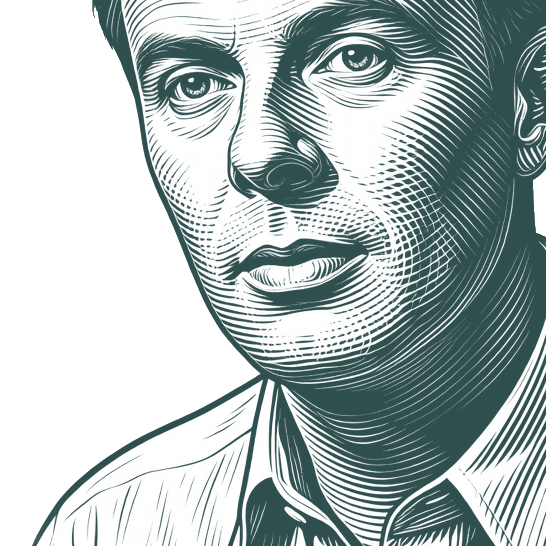

That’s what the human brain is there for — to turn the chaos of given experience into a set of manageable symbols. Sometimes the symbols correspond fairly closely to some of the aspects of the external reality behind our experience; then you have science and common sense. Sometimes, on the contrary, the symbols have almost no connection with external reality; then you have paranoia and delirium. More often there’s a mixture, part realistic and part fantastic; that’s religion.
Enhance Your Quote Experience
Enjoy ad-free browsing, unlimited collections, and advanced search features with Premium.
I found myself all at once on the brink of panic. This, I suddenly felt, was going too far. Too far, even though the going was into intenser beauty, deeper significance. The fear, as I analyze it in retrospect, was of being overwhelmed, of disintegrating under a pressure of reality greater than a mind, accustomed to living most of the time in a cosy world of symbols, could possibly bear. The literature of religious experience abounds in references to the pains and terrors overwhelming those who have come, too suddenly, face to face with some manifestation of the Mysterium tremendum. In theological language, this fear is due to the in-compatibility between man's egotism and the divine purity, between man's self-aggravated separateness and the infinity of God. Following Boehme and William Law, we may say that, by unregenerate souls, the divine Light at its full blaze can be apprehended only as a burning, purgatorial fire. An almost identical doctrine is to be found in The Tibetan Book of the Dead, where the departed soul is described as shrinking in agony from the Pure Light of the Void, and even from the lesser, tempered Lights, in order to rush headlong into the comforting darkness of selfhood as a reborn human being, or even as a beast, an unhappy ghost, a denizen of hell. Anything rather than the burning brightness of unmitigated Reality — anything!
Only the middle distance and what may be called the remoter foreground are strictly human. When we look very near or very far, man either vanishes altogether or loses his primacy. The astronomer looks even further afield than the Sung painter and sees even less of human life. At the other end of the scale the physicist, the chemist, the physiologist pursue the close-up – the cellular close-up, the molecular, the atomic and subatomic. Of that which, at twenty feet, even at arm's length, looked and sounded like a human being no trace remains.
Something analogous happens to the myopic artist and the happy lover. In the nuptial embrace personality is melted down; the individual (it is the recurrent theme of Lawrence's poems and novels) ceases to be himself and becomes a part of the vast impersonal universe.
And so it is with the artist who chooses to use his eyes at the near point. In his work humanity loses its importance, even disappears completely. Instead of men and women playing their fantastic tricks before high heaven, we are asked to consider the lilies, to meditate on the unearthly beauty of 'mere things,' when isolated from their utilitarian context and rendered as they are, in and for themselves. Alternatively (or, at an earlier stage of artistic development, exclusively), the nonhuman world of the near-point is rendered in patterns. These patterns are abstracted for the most part from leaves and flowers – the rose, the lotus, the acanthus, palm, papyrus – and are elaborated, with recurrences and variations, into something transportingly reminisce
Works in ChatGPT, Claude, or Any AI
Add semantic quote search to your AI assistant via MCP. One command setup.
As I have already urged, the practice of that which is ethically best—what we call goodness or virtue—involves a course of conduct which in all respects is opposed to that which leads to success in the cosmic struggle for existence. In place of ruthless self-assertion, it demands self-restraint; in place of thrusting aside or treading down all competitors, it requires that the individual shall not merely respect, but shall help his fellows; its influence is directed not so much to the survival of the fittest as to the fitting of as many as possible to survive. It repudiates the gladiatorial theory of existence. It demands that each man who enters into the enjoyment of the advantages of a polity shall be mindful of his debt to those who have laboriously constructed it, and shall take heed that no act of his weakens the fabric in which he has been permitted to live. Laws and moral precepts are directed to the end of curbing the cosmic process, and reminding the individual of his duty to the community, to the protection and influence of which he owes, if not existence itself, at least the life of something better than a brutal savage. (Evolution and Ethics, pp. 81-82.)
Enhance Your Quote Experience
Enjoy ad-free browsing, unlimited collections, and advanced search features with Premium.