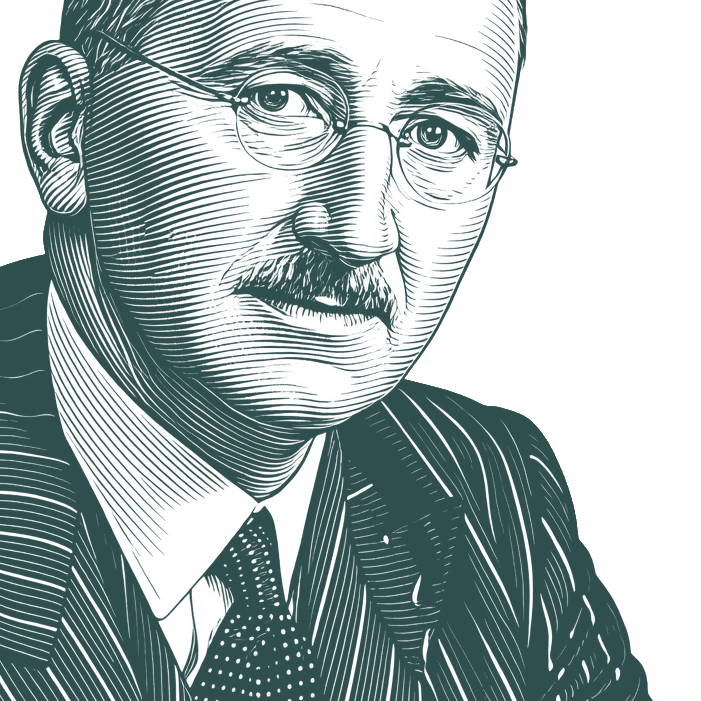
It seems to me that my original plan is right, but I am afraid that I’ve come to the conclusion that politically, it is completely Utopian. Governmen… - Friedrich Hayek
""
It seems to me that my original plan is right, but I am afraid that I’ve come to the conclusion that politically, it is completely Utopian. Governments will never allow monetary competition, and even bankers do not understand the idea because they have all grown up in the system which is so completely dependent on central banks. So I think we need a roundabout way. After all, in the modern world, currency is no longer the most important money. Credit and credit cards are substitutes. While governments can stop people from issuing money, they can hardly stop them from opening accounts in something unless they introduce a complete system of exchange control. I do not expect that any bank will understand this idea. But I hope that one of the big dealers in raw materials will be prepared to open accounts which will be redeemable in so much of current moneys as are necessary to buy this list of raw materials. Through these accounts he can make his unit—call it the “solid”—the standard unit without it ever being used in circulation. People very soon will begin to keep their accounts in “solids”—the only thing which is trustworthy. Although it’s a thing where many people can compete, most of them will probably choose the same list of raw materials. If one major firm will start this, others will imitate it. So I think we can forget about existing money and existing banks, and gradually open a system of accounts which will displace the government money.
English
Collect this quote
About
Friedrich Hayek
Friedrich August von Hayek CH (8 May 1899 – 23 March 1992) was an Austrian, later British, economist and philosopher best known for his defense of classical liberalism. In 1974, Hayek shared the (with Gunnar Myrdal) for his "pioneering work in the theory of money and economic fluctuations and … penetrating analysis of the interdependence of economic, social and institutional phenomena". (Nobel Memorial Prize, 1974)
Portrait adapted from
Wikimedia Commons, The original uploader was DickClarkMises at English Wikipedia. (CC BY-SA)
Also Known As
Native Name:
Friedrich August von Hayek
Alternative Names:
Friedrich von Hayek
•
Friedrich A. von Hayek
•
Friedrich A. Von Hayek
•
F. A. von Hayek
•
Friedrich August Von Hayek
•
Hayek
•
F. A. Hayek
All economic activity is carried out through time. Every individual economic process occupies a certain time, and all linkages between economic processes necessarily involve longer or shorter periods of time.
I did say in print, in February, 1929 that there was no hope for economic recovery in Europe before American interest rates came down. That wouldn’t be until the American boom collapsed — which was likely to happen within the next few months.And this did, in fact, happen in October 1929. What made me expect this, of course, was one of my main theoretical beliefs — that an inflationary boom cannot be maintained indefinitely. I was sure that a very unstable situation was created by the artificial prolongation of the boom in 1927, when the Federal Reserve tried to stave off a collapse by credit expansion.
Enhance Your Quote Experience
Enjoy ad-free browsing, unlimited collections, and advanced search features with Premium.
An evil fate befall German efforts to defend the ideal of liberty in general and in the field of economics in particular, with the result that today I am almost the only survivor of a generation that set out in the wake of the First World War to devote all its energies to the preservation of a civilised society, a generation that set itself the task to build a better society in a systematic fashion and to learn to understand, and to some extent defend, a tradition that had civilised the world.