Organic life, we are told, has developed gradually from the protozoon to the philosopher, and this development, we are assured, is indubitably an adv… - Bertrand Russell
""
Organic life, we are told, has developed gradually from the protozoon to the philosopher, and this development, we are assured, is indubitably an advance. Unfortunately it is the philosopher, not the protozoon, who gives us this assurance.
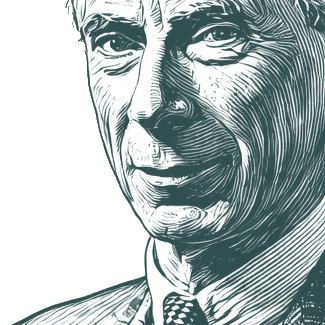
Bertrand Arthur William Russell, 3rd Earl Russell (May 18, 1872 – February 2, 1970) was a British philosopher, logician, mathematician, historian, and social critic. In 1950, he was awarded a Nobel Prize in Literature.
Biography information from
Wikiquote·
Portrait adapted from
Wikimedia Commons, Bassano Ltd (Public domain / CC0)
Also Known As
Birth Name:
Bertrand Arthur William Russell
Alternative Names:
Bertrand Russell, 3rd Earl Russell
•
Bertrand Russell, Earl Russell
•
Bertrand Arthur William Russell, 3rd Earl Russell
•
Russell
I know that most people meet such considerations with a kind of facile optimism; they say "Oh, the men of science are sure to think of some clever invention, and even if they don't it will last my time." They feel like the proverbial Irishman — "Why should I do anything for posterity; it never did anything for me!" But I am concerned in this book with Man, considered as a single creature with a single biography. I cannot be content with a brief moment of riotous living followed by destitution, and however clever the scientists may be, there are some things that they cannot be expected to achieve. When they have used up all the easily available sources of energy that nature has scattered carelessly over the surface of our planet, they will have to resort to more laborious processes, and these will involve a gradual lowering of the standard of living. Modern industrialists are like men who have come for the first time upon fertile virgin land, and can live for a little while in great comfort with only a modicum of labor. It would be irrational to hope that the present heyday of industrialism will not develop far beyond its present level, but sooner or later, owing to the exhaustion of raw material, its capacity to supply human needs will diminish, not suddenly, but gradually. This could, of course, be prevented if men exercised any restraint or foresight in their present frenzied exploitation. Perhaps before it is too late they will learn to do so. But this is a question of politics, and I do not wish, as yet, to consider the political aspect of our problem.
Dogmatism is the greatest of mental obstacles to human happiness.
People seem good while they are oppressed, but they only wish to become oppressors in their turn: life is nothing but a competition to be the criminal rather than the victim.