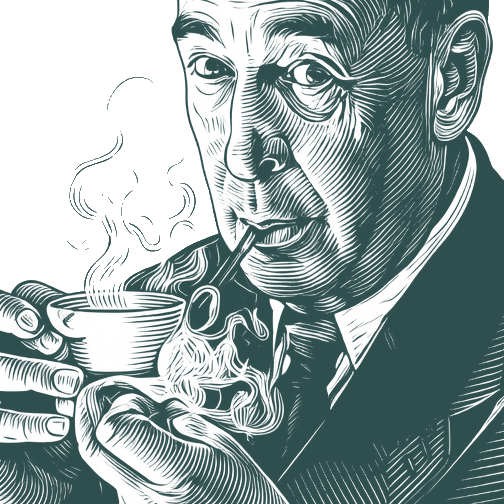
The books or the music in which we thought the beauty was located will betray us if we trust to them; it was not in them, it only came through them, … - C. S. Lewis

" "

The books or the music in which we thought the beauty was located will betray us if we trust to them; it was not in them, it only came through them, and what came through them was longing. These things — the beauty, the memory of our own past — are good images of what we really desire; but if they are mistaken for the thing itself they turn into dumb idols, breaking the hearts of their worshipers. For they are not the thing itself; they are only the scent of a flower we have not found, the echo of a tune we have not heard, news from a country we have never yet visited.

English
Collect this quote

About C. S. Lewis

Clive Staples Lewis (29 November 1898 – 22 November 1963) was an Irish author, scholar of medieval literature, and Christian apologist. He is best known for his essays on Christianity and for the children's fantasy series The Chronicles of Narnia.

Biography information from Wikiquote

Also Known As

Birth Name: Clive Staples Lewis
Alternative Names: Clive Hamilton N. W. Clerk CS Lewis C.S. Lewis Clive Lewis Nat Whilk
PREMIUM FEATURE
Advanced Search Filters

Filter search results by source, date, and more with our premium search tools.

Related quotes. More quotes will automatically load as you scroll down, or you can use the load more buttons.

Additional quotes by C. S. Lewis

"It may be possible for each to think too much of his own potential glory hereafter; it is hardly possible for him to think too often or too deeply about that of his neighbor. The load, or weight, or burden of my neighbor's glory should be laid daily on my back, a load so heavy that only humility can carry it, and the backs of the proud will be broken. ...

"It is in light of these overwhelming possibilities, it is with the awe and the circumspection proper to them, that we should conduct all our dealings with one another, all friendships, all loves, all play, all politics. There are no ordinary people. You have never talked to a mere mortal. Nations, cultures, arts, civilizations — these are mortal, and their life is to ours as the life of a gnat. But it is immortals whom we joke with, work with, marry, snub and exploit. ... Next to the Blessed Sacrament itself, your neighbor is the holiest object presented to your senses.

And Peter became a tall and deep-chested man and a great warrior, and he was called King Peter the Magnificent. And Susan grew into a tall and gracious woman with black hair that fell almost to her feet and the kings of the countries beyond the sea began to send ambassadors asking for her hand in marriage. And she was called Queen Susan the Gentle. Edmund was a graver and quieter man than Peter, and great in council and judgment. he was called King Edmund the Just. But as for Lucy, she was always gay and golden-haired, and all princes in those parts desired her to be their Queen, and her own people called her Queen Lucy the Valiant.

Go Premium

Support Quotewise while enjoying an ad-free experience and premium features.

View Plans
The doctrine of the Second Coming has failed, so far as we are concerned, if it does not make us realize that at every moment of every year in our lives Donne's question "What if this present were the world's last night?" is equally relevant.

Loading...