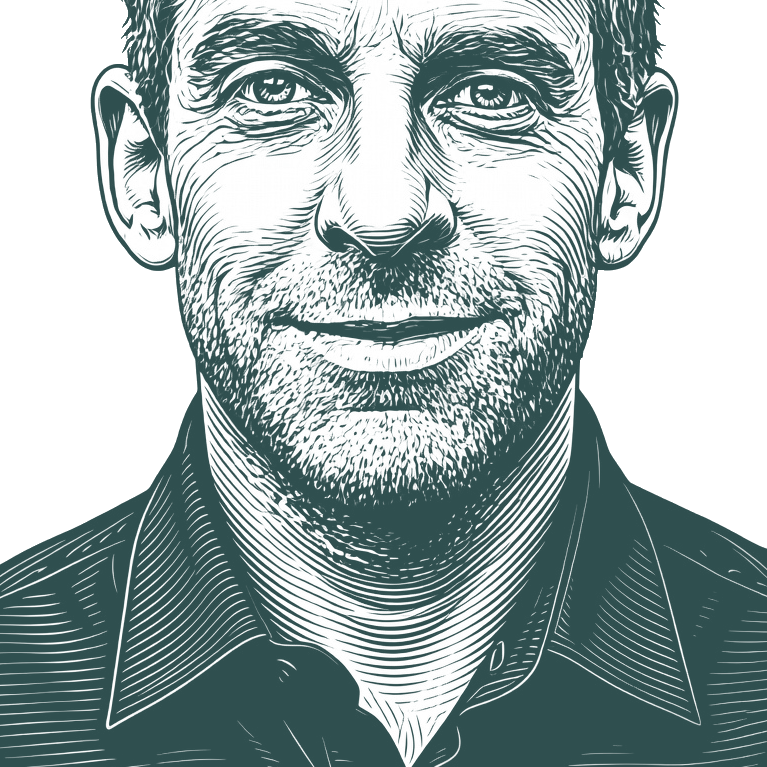
The idea that any one of our religions represents the infallible word of the One True God requires an encyclopedic ignorance of history, mythology, a… - Sam Harris
""
The idea that any one of our religions represents the infallible word of the One True God requires an encyclopedic ignorance of history, mythology, and art even to be entertained — as the beliefs, rituals, and iconography of each of our religions attest to centuries of cross-pollination among them.
English
Collect this quote
About
Sam Harris
Samuel Benjamin Harris (born April 9, 1967) is an American author, philosopher, public intellectual, and neuroscientist, as well as the co-founder and CEO of Project Reason. He is the author of The End of Faith (2004), which won the PEN/Martha Albrand Award for First Nonfiction in 2005 and appeared on The New York Times best seller list for 33 weeks, Letter to a Christian Nation (2006), The Moral Landscape (2010), Lying (2011), Free Will (2012), and most recently Waking Up: A Guide to Spirituality Without Religion (2014).
Biography information from
Wikiquote·
Portrait adapted from
Wikimedia Commons, Cmichel67 (Christopher Michel) (CC BY-SA)
Nothing that a Christian, a Muslim, and a Hindu can experience — self-transcending love, ecstasy, bliss, inner light — constitutes evidence in support of their traditional beliefs, because their beliefs are logically incompatible with one another. A deeper principle must be at work.
And then came the insight that irrevocably transformed my sense of how good human life could be. I was feeling boundless love for one of my best friends, and I suddenly realized that if a stranger had walked through the door at that moment, he or she would have been fully included in this love. Love was at bottom impersonal — and deeper than any personal history could justify. Indeed, a transactional form of love — I love you because. . . — now made no sense at all.
I talk a lot about this in the book. Why is it that our universe gets gradually more complex? Once you get into biology, the fundamental reason is that if you’re living in a complex environment, then the smarter you are the more successful you’ll be, because you can exploit regularities in the environment to your advantage. Eventually all the other organisms are motivated, in turn, to get smarter. As organisms get smarter and smarter, they keep creating an ever more complex environment for one another, and they all get smarter.