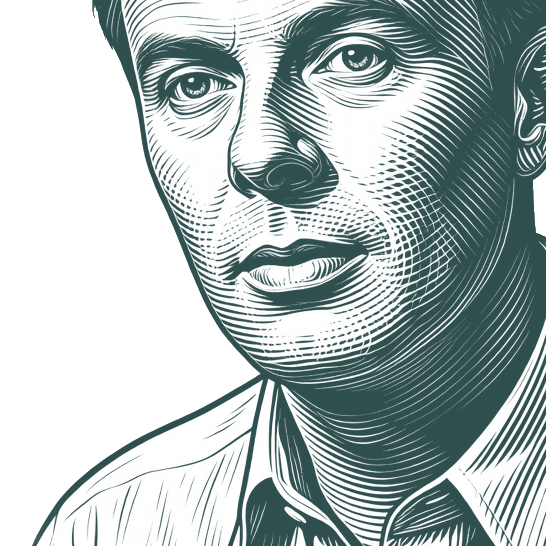
"But, Bernard, you're saying the most awful things.'
'Don't you wish you were free, Lenina?'
'I don't know what you mean. I am free. Free to have t… - Aldous Huxley
"But, Bernard, you're saying the most awful things.'
'Don't you wish you were free, Lenina?'
'I don't know what you mean. I am free. Free to have the most wonderful time. Everybody's happy nowadays.'
He laughed, 'Yes, "Everybody's happy nowadays." We begin giving children that at five. But wouldn't you like to be free to e happy in some other way, Lenina? In your own way, for example; not in everybody else's way."
English
Collect this quote
About
Aldous Huxley
Aldous Leonard Huxley (26 July 1894 – 22 November 1963) was a British author known for his novel Brave New World. He was the grandson of Thomas Henry Huxley and younger brother of Julian Huxley.
civilization has absolutely no need of nobility or heroism. These things are symptoms of political inefficiency. In a properly organized society like ours, nobody has any opportunities for being noble or heroic. Conditions have got to be thoroughly unstable before the occasion can arise. Where there are wars, where there are divided allegiances, where there are temptations to be resisted, objects of love to be fought for or defended–there, obviously, nobility and heroism have some sense.
Thought must be divided against itself before it can come to any knowledge of itself.
Works in ChatGPT, Claude, or Any AI
Add semantic quote search to your AI assistant via MCP. One command setup.
As a victim, the Savage possessed, for Bernard, this enormous superiority over the others: that he was accessible. One of the principal functions of a friend is to suffer (in a milder and symbolic form) the punishments what we should like, but are unable, to inflict upon our enemies.