I assume that Luther has risen from the grave. For several years now he has been living among us but incognito; he has been observing the lives we le… - Søren Kierkegaard
""
I assume that Luther has risen from the grave. For several years now he has been living among us but incognito; he has been observing the lives we lead, has been scrutinizing everyone in this regard and me also. I assume that he speaks to me one day and says, “Are you a believer? Do you have faith?” Anyone who knows me as an author will see that I would perhaps be the one who might come off best of all in such and examination, for I have continually said, “I do not have faith” – I have expressed, as does a bird's alarmed flight before a storm, that there is mischief brewing here, “I do not have faith.” So I should say to Luther, “No, dear Luther, I have at least shown the respect of saying: I do not have faith.” However, I shall not press this, but, just as others call themselves Christians and believers, I, too, shall say, “I am a believer,” for otherwise what I wish to be cleared up will not be cleared up.
English
Collect this quote
About
Søren Kierkegaard
Søren Aabye Kierkegaard (5 May 1813 – 11 November 1855) was a Danish Christian philosopher and theologian, considered to be a founder of Existentialist thought and Absurdist traditions. He wrote critical texts on organized religion, Christendom, morality, ethics, psychology and philosophy of religion, displaying a fondness for metaphor, irony and parables.
Biography information from
Wikiquote·
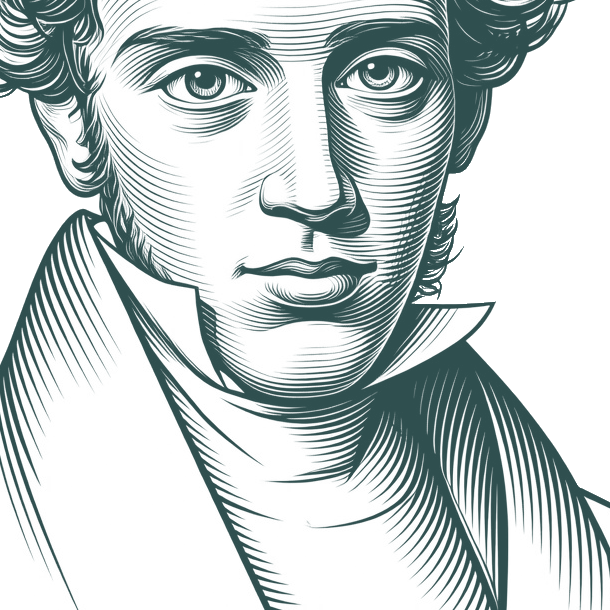
Portrait adapted from
Wikimedia Commons, La Biblioteca Real de Dinamarca (Public domain / CC0)
Also Known As
Pen Names:
Victor Eremita
•
A
•
Judge William
•
Johannes de silentio
•
Constantine Constantius
•
Young Man
•
Vigilius Haufniensis
•
Nicolaus Notabene
•
Hilarius Bookbinder
•
Johannes Climacus
•
Inter et Inter
•
H.H.
•
Anti-Climacus
•
B
•
Johannes de Silentio
•
Constantin Constantius
•
P. CH. Kierkegaard
Native Name:
Søren Aabye Kierkegaard
Alternative Names:
Kierkegaard
•
Climacus
•
Sören Aaby Kierkegaard
In the deepest sense, the being in a state of sin is the sin, the particular sins are not the continuation of sin, they are expressions of its continuation.
Works in ChatGPT, Claude, or Any AI
Add semantic quote search to your AI assistant via MCP. One command setup.