Lernaeodiscus porcellanae turns control of the host into a fine art. After castration by the parasite, male crabs develop female characteristics in b… - Stephen Jay Gould
""
Lernaeodiscus porcellanae turns control of the host into a fine art. After castration by the parasite, male crabs develop female characteristics in both anatomy and behavior, while females become even more feminized. The emerging externa then takes the same form and position as the crab's own egg mass... The crabs then treat the externa as their own brood. In other words, the parasite usurps all the complex care normally invested in the crab's own progeny.
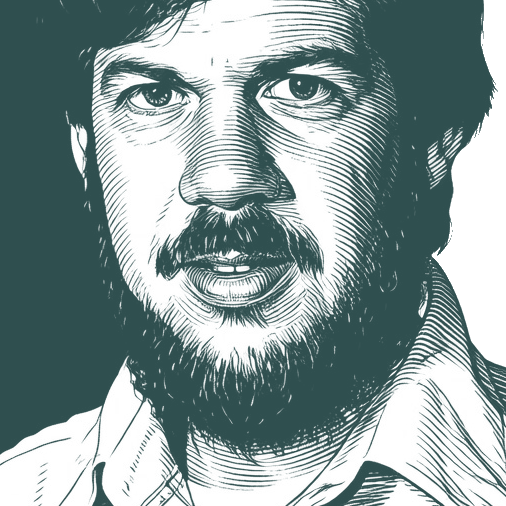
Stephen Jay Gould (September 10, 1941 – May 20, 2002) was an American geologist, paleontologist, evolutionary biologist and popular-science author, who spent most of his career teaching at Harvard University and working at the American Museum of Natural History in New York. He was one of the most influential and widely read writers of popular science of his generation.
Biography information from
Wikiquote·
Portrait adapted from
Wikimedia Commons, Lawrence Lipke (Public domain / CC0)
Misunderstanding of probability may be the greatest of all general impediments to scientific literacy.
No one should feel at all offended or threatened by the obvious fact that we are not all born entirely blank, or entirely the same, in our mixture of the broad behavioral propensities defining what we call “temperament.”
Limited Time Offer
Premium members can get their quote collection automatically imported into their Quotewise collections.
Our failure to discern a universal good does not record any lack of insight or ingenuity, but merely demonstrates that nature contains no moral messages framed in human terms. Morality is a subject for philosophers, theologians, students of the humanities, indeed for all thinking people. The answers will not be read passively from nature; they do not, and cannot, arise from the data of science. The factual state of the world does not teach us how we, with our powers for good and evil, should alter or preserve it in the most ethical manner.