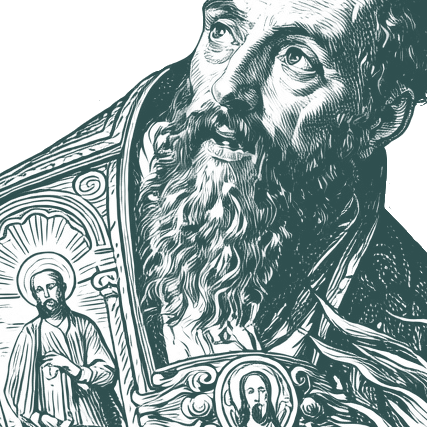
Give, O Lord, what Thou commandest, and then command what Thou wilt. - Augustine of Hippo
""
Give, O Lord, what Thou commandest, and then command what Thou wilt.
English
Collect this quote
About
Augustine of Hippo
St. Augustine of Hippo (13 November 354 – 28 August 430) was a Christian theologian, rhetor, North African bishop, Doctor of the Catholic Church, saint, and a philosopher influenced in his early years by Manichaeism and the Neo-Platonism of Plotinus.
Biography information from
Wikiquote·
Portrait adapted from
Wikimedia Commons, Philippe de Champaigne (Public domain / CC0)
Also Known As
Native Name:
Aurelius Augustinus
Alternative Names:
Saint Augustine
•
Saint Austin
•
Augustine
•
St. Augoustinos
•
St. Augustine of Hippo
•
Aurelius Augustine
•
Aurelius Augustinus Hipponensis
•
St. Augustine
•
Augustinus
•
Saint Augustine of Hippo
•
Augustinus, Aurelius
•
bishop of Hippo
Greed is not a defect in the gold that is desired but in the man who loves it perversely by falling from justice which he ought to esteem as incomparably superior to gold; nor is lust a defect in bodies which are beautiful and pleasing: it is a sin in the soul of the one who loves corporal pleasures perversely, that is, by abandoning that temperance which joins us in spiritual and unblemishable union with realities far more beautiful and pleasing; nor is boastfulness a blemish in words of praise: it is a failing in the soul of one who is so perversely in love with other peoples' applause that he despises the voice of his own conscience; nor is pride a vice in the one who delegates power, still less a flaw in the power itself: it is a passion in the soul of the one who loves his own power so perversely as to condemn the authority of one who is still more powerful.