But if you know about God, why don't you tell them?' asked the Savage indignantly.
'Why don't you give them these books about God?'
'For the same rea… - Aldous Huxley
""
But if you know about God, why don't you tell them?' asked the Savage indignantly. 'Why don't you give them these books about God?' 'For the same reason as we don't give them Othello: they're old; they're about God hundreds of years ago. Not about God now.' 'But God doesn't change.' 'Men do, though.' 'What difference does that make?' "All the difference in the world,' said Mustapha Mond.
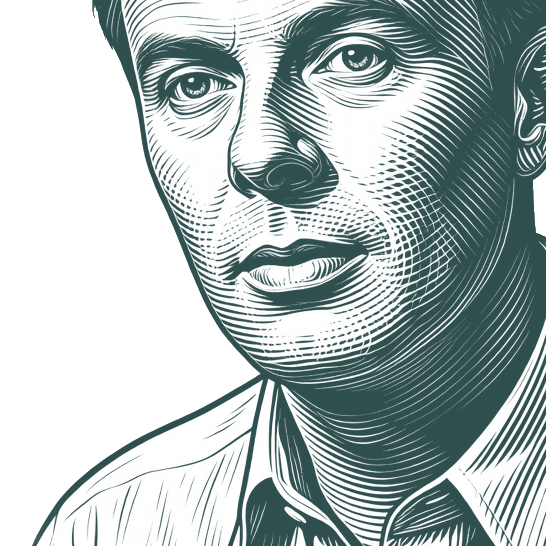
Aldous Leonard Huxley (26 July 1894 – 22 November 1963) was a British author known for his novel Brave New World. He was the grandson of Thomas Henry Huxley and younger brother of Julian Huxley.
There are quiet places also in the mind," he said, meditatively. "But we build bandstand and factories on them. Deliberately — to put a stop to the quietness. We don't like the quietness. All the thoughts, all the preoccupation in my head — round and round continually." He made a circular motion with his hands. "And the jazz bands, the music hall songs, the boys shouting the news. What's it all for? To put an end to the quiet, to break it up and disperse it, to pretend at any cost it isn't there. Ah, but it is, it is there, in spite of everything, at the back of everything. Lying awake at night, sometimes — not restlessly, but serenely, waiting for sleep — the quiet re-establishes itself, piece by piece; all the broken bits, all the fragments of it we've been so busily dispersing all day long. It re-establishes itself, an inward quiet, like this outward quiet of grass and trees. It fills one, it grows –a crystal quiet, a growing expanding crystal. It grows, it becomes more perfect; it is beautiful and terrifying, yes, terrifying, as well as beautiful. For one's alone in the crystal and there's no support from outside, there's nothing external and important, nothing external and trivial to pull oneself up by or to stand up, superiorly, contemptuously, so that one can look down. There's nothing to laugh at or feel enthusiastic about. But the quiet grows and grows. Beautifully and unbearably. And at last you are conscious of something approaching; it is almost a faint sound of footsteps. Something inexpressibly lovely and wonderful advances through the crystal, nearer, nearer. And oh, inexpressibly terrifying. For if it were to touch you, if it were to seize and engulf you, you'd die; all the regular habitual, daily part of you would die. There would be and end of bandstands and whizzing factories, and one would have to begin living arduously in the quiet, arduously n some strange unheard-of manner. Nearer, nearer come the steps; but one can't face the advancing thing.
Christian philosophers have found no difficulty in justifying imperialism, war, the capitalist system, the use of torture, the censorship of the press and ecclesiastical tyrannies of every sort, from the tyranny of Rome to the tyrannies of Geneva and New England.