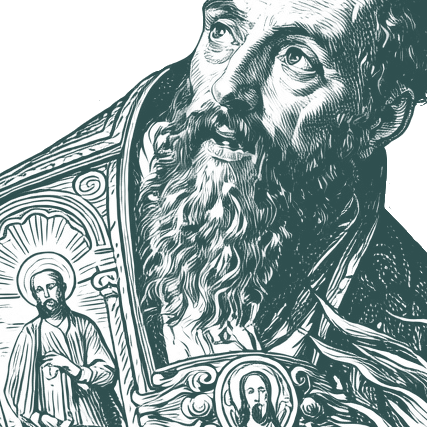
Late have I loved you, beauty so old and so new: late have I loved you. And see, you were within and I was in the external world and sought you there… - Augustine of Hippo
""
Late have I loved you, beauty so old and so new: late have I loved you. And see, you were within and I was in the external world and sought you there, and in my unlovely state I plunged into those lovely created things which you made. You were with me, and I was not with you. The lovely things kept me far from you, though if they did not have their existence in you, they had no existence at all. You called and cried out loud and shattered my deafness. You were radiant and resplendent, you put to flight my blindness. You were fragrant, and I drew in my breath and now pant after you. I tasted you, and I feel but hunger and thirst for you. You touched me, and I am set on fire to attain the peace which is yours.
St. Augustine of Hippo (13 November 354 – 28 August 430) was a Christian theologian, rhetor, North African bishop, Doctor of the Catholic Church, saint, and a philosopher influenced in his early years by Manichaeism and the Neo-Platonism of Plotinus.
Biography information from
Wikiquote·
Portrait adapted from
Wikimedia Commons, Philippe de Champaigne (Public domain / CC0)
Also Known As
Native Name:
Aurelius Augustinus
Alternative Names:
Saint Augustine
•
Saint Austin
•
Augustine
•
St. Augoustinos
•
St. Augustine of Hippo
•
Aurelius Augustine
•
Aurelius Augustinus Hipponensis
•
St. Augustine
•
Augustinus
•
Saint Augustine of Hippo
•
Augustinus, Aurelius
•
bishop of Hippo
Late have I loved you, O Beauty ever ancient and ever new! Late have I loved you! And, behold, you were within me, and I out of myself, and there I searched for you.
Augustine, Augustine, quid quaeris? Putasne brevi immettere vasculo mare totum?
For a sentence is not complete unless each word, once its syllables have been pronounced, gives way to make room for the next...They are set up on the course of their existence, and the faster they climb towards its zenith, the more they hasten towards the point where they exist no more.
PREMIUM FEATURE
Advanced Search Filters
Filter search results by source, date, and more with our premium search tools.
Justice being taken away, then, what are kingdoms but great robberies? For what are robberies themselves, but little kingdoms? The band itself is made up of men; it is ruled by the authority of a prince, it is knit together by the pact of the confederacy; the booty is divided by the law agreed on. If, by the admittance of abandoned men, this evil increases to such a degree that it holds places, fixes abodes, takes possession of cities, and subdues peoples, it assumes the more plainly the name of a kingdom, because the reality is now manifestly conferred on it, not by the removal of covetousness, but by the addition of impunity. Indeed, that was an apt and true reply which was given to Alexander the Great by a pirate who had been seized. For when that king had asked the man what he meant by keeping hostile possession of the sea, he answered with bold pride, “What thou meanest by seizing the whole earth; but because I do it with a petty ship, I am called a robber, whilst thou who dost it with a great fleet art styled emperor.”