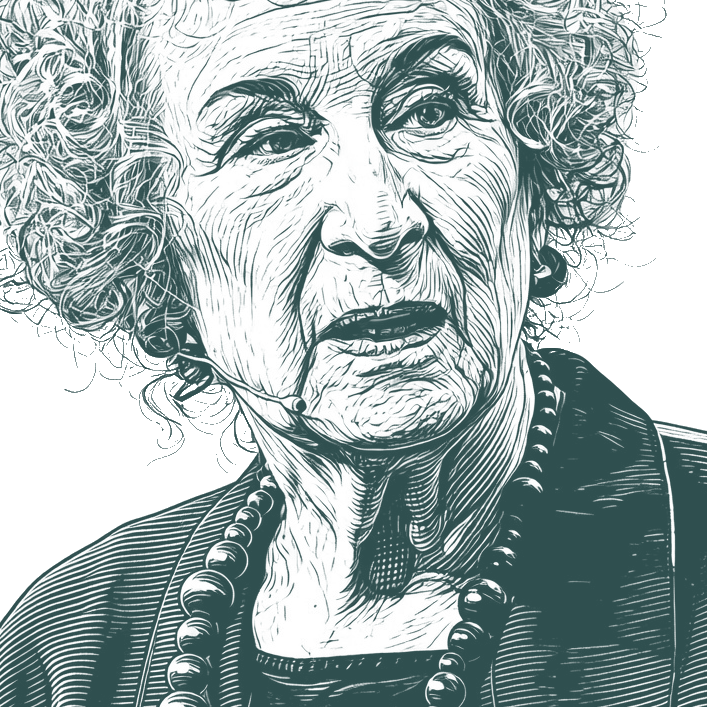
As I was writing about Grace Marks, and about her interlude in the Asylum, I came to see her in context — the context of other people's opinions, both the popular images of madness and the scientific explanations for it available at the time. A lot of what was believed and said on the subject appears like sheer lunacy to us now. But we shouldn't be too arrogant — how many of our own theories will look silly when those who follow us have come up with something better? But whatever the scientists may come up with, writers and artists will continue to portray altered mental states, simply because few aspects of our nature fascinate people so much. The so-called mad person will always represent a possible future for every member of the audience — who knows when such a malady may strike? When "mad," at least in literature, you aren't yourself; you take on another self, a self that is either not you at all, or a truer, more elemental one than the person you're used to seeing in the mirror. You're in danger of becoming, in Shakespeare's works, a mere picture or beast, and in Susanna Moodie's words, a mere machine; or else you may become an inspired prophet, a truth-sayer, a shaman, one who oversteps the boundaries of the ordinarily visible and audible, and also, and especially, the ordinarily sayable. Portraying this process is deep power for the artist, partly because it's a little too close to the process of artistic creation itself, and partly because the prospect of losing our self and being taken over by another, unfamiliar self is one of our deepest human fears.
This has been her problem all her life: picturing other people's responses. She's too good at it. She can picture the response of anyone — other people's reactions, their emotions, their criticisms, their demands — but somehow they don't reciprocate. Maybe they can't. Maybe they lack the gift, if it is one.
Go Premium
Support Quotewise while enjoying an ad-free experience and premium features.
Those walls and bars are there for a reason,” said Crake. “Not to keep us out, but to keep them in. Mankind needs barriers in both cases.” “Them?” “Nature and God.” “I thought you didn’t believe in God,” said Jimmy. “I don’t believe in Nature either,” said Crake. “Or not with a capital N.