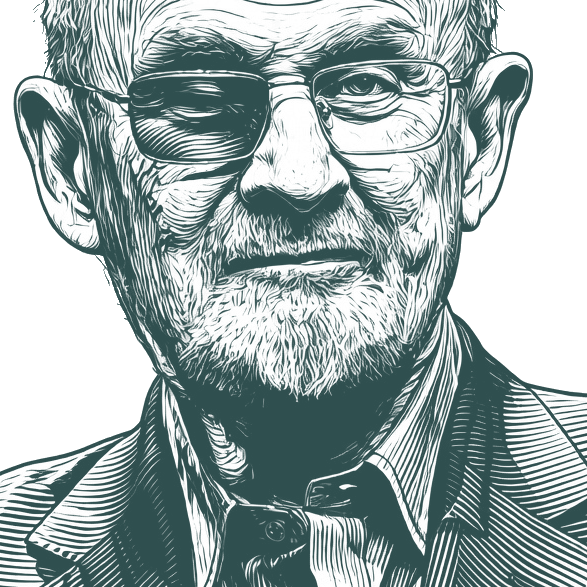
Scraps of memory: this is not how a climax should be written. A climax should surge towards its Himalayan peak; but I am left with shreds, and must j… - Salman Rushdie
""
Scraps of memory: this is not how a climax should be written. A climax should surge towards its Himalayan peak; but I am left with shreds, and must jerk towards my crisis like a puppet with broken strings. This is not what I had planned; but perhaps the story you finish is never the one you begin.
Sir Salman Rushdie (born Ahmed Salman Rushdie, Urdu: أحمد سلمان رشدی, Hindi: अह्मद सलमान रश्डी on 19 June 1947) is an Indian-born British novelist and essayist. Most of his work is set on the Indian subcontinent.
Biography information from
Wikiquote·
Portrait adapted from
Wikimedia Commons, Elena Ternovaja (CC BY-SA)
Also Known As
Native Name:
سلمان رُشدی
•
سلمان رشدی
Alternative Names:
Sir Ahmed Salman Rushdie
•
Rushdie
•
Ahmed Salman Rushdie
•
Joseph Anton
"So Oz finally became home; the imagined world became the actual world, as it does for us all, because the truth is that once we have left our childhood places and started out to make our own lives, armed only with what we have and are, we understand that the real secret of the ruby slippers is not that "there's no place like home," but rather that there is no longer such a place as home: except, of course, for the homes we make, or the homes that are made for us, in Oz, which is anywhere and everywhere, except the place from which we began. In the place from which I began, after all, I watched the film from the child's - Dorothy's point of view. I experienced, with her, the frustration of being brushed aside by Uncle Henry and Auntie Em, busy with their dull grown-up counting. Like all adults, they couldn't focus on what was really important to Dorothy: namely, the threat to Toto. I ran away with Dorothy and then ran back. Even the shock of discovering that the Wizard was a humbug was a shock I felt as a child, a shock to the child's faith in adults. Perhaps, too, I felt something deeper, something I couldn't articulate; perhaps some half-formed suspicion about grown-ups was being confirmed. Now, as I look at the movie again, I have become the fallible adult. Now I am a member of the tribe of imperfect parents who cannot listen to their children's voices. I, who no longer have a father, have become a father instead, and now it is my fate to be unable to satisfy the longings of a child. This is the last and most terrible lesson of the film: that there is one final, unexpected rite of passage. In the end, ceasing to be children, we all become magicians without magic, exposed conjurers, with only our simply humanity to get us through. We are the humbugs now."
In an ideal world you could reunite the Pakistan-occupied part of Kashmir with the Indian-occupied part and restore the old borders. You could have both India and Pakistan agreeing to guarantee those borders, demilitarise the area, and to invest in it economically. In a sane world that would happen but we don't live in a sane world.
Works in ChatGPT, Claude, or Any AI
Add semantic quote search to your AI assistant via MCP. One command setup.
a simple dream, set in a city park, along an avenue of mature elms, whose overarching branches turned the avenue into a green tunnel into which the sky and the sunlight were dripping, here and there, through the perfect imperfections in the canopy of leaves.