All through our history, we have been changing the world with our technology. Our technology has been of two kinds, green and grey. Green technology … - Freeman Dyson
""
All through our history, we have been changing the world with our technology. Our technology has been of two kinds, green and grey. Green technology is seeds and plants, gardens and vineyards and orchards, domesticated horses and cows and pigs, milk and cheese, leather and wool. Grey technology is bronze and steel, spears and guns, coal and oil and electricity, automobiles and airplanes and rockets, telephones and computers. Civilization began with green technology, with agriculture and animal-breeding, ten thousand years ago. Then, beginning about three thousand years ago, grey technology became dominant, with mining and metallurgy and machinery. For the last five hundred years, grey technology has been racing ahead and has given birth to the modern world of cities and factories and supermarkets. The dominance of grey technology is now coming to an end.
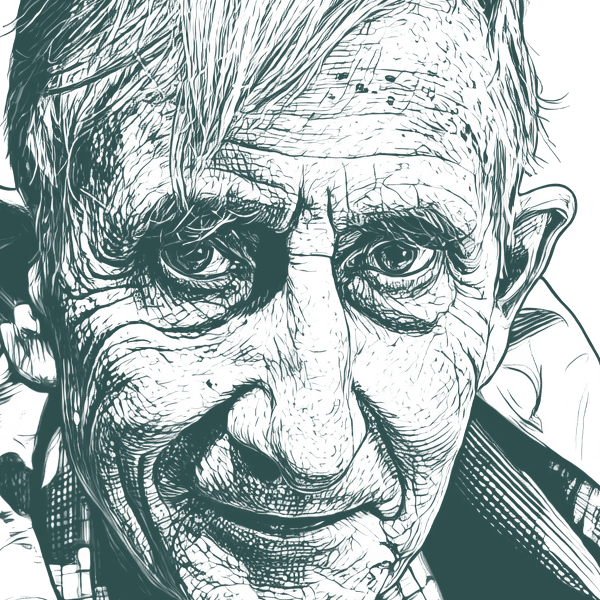
Freeman John Dyson (15 December 1923 – 28 February 2020) was an English-born American physicist, mathematician, and futurist, famous for his work in quantum mechanics, nuclear weapons design and policy, and the search for extraterrestrial intelligence. He was the winner of the Templeton Prize in the year 2000.
"It is remarkable that mind enters into our awareness of nature on two separate levels. At the highest level, the level of human consciousness, our minds are somehow directly aware of the complicated flow of electrical and chemical patterns in our brains. At the lowest level, the level of single atoms and electrons, the mind of an observer is again involved in the description of events. Between lies the level of molecular biology, where mechanical models are adequate and mind appears to be irrelevant. But I, as a physicist, cannot help suspecting that there is a logical connection between the two ways in which mind appears in my universe. I cannot help thinking that our awareness of our own brains has something to do with the process which we call "observation" in atomic physics. That is to say, I think our consciousness is not just a passive epiphenomenon carried along by the chemical events in our brains, but is an active agent forcing the molecular complexes to make choices between one quantum state and another. In other words, mind is already inherent in every electron, and the processes of human consciousness differ only in degree but not in kind from the processes of choice between quantum states which we call "chance" when they are made by electrons."
When all is said and done, science is about things and theology is about words. Things behave in the same way everywhere, but words do not. ... Theology works in one culture alone. If you have not grown up in Polkinghorne's culture, where words such as "incarnation" and "trinity" have a profound meaning, you cannot share his vision.
Go Premium
Support Quotewise while enjoying an ad-free experience and premium features.