He did not wander aimlessly, though he never knew which village would be his next port of call. He was seeking no particular place, but a mood, an in… - Arthur C. Clarke
""
He did not wander aimlessly, though he never knew which village would be his next port of call. He was seeking no particular place, but a mood, an influence — indeed, a way of life.
English
Collect this quote
About
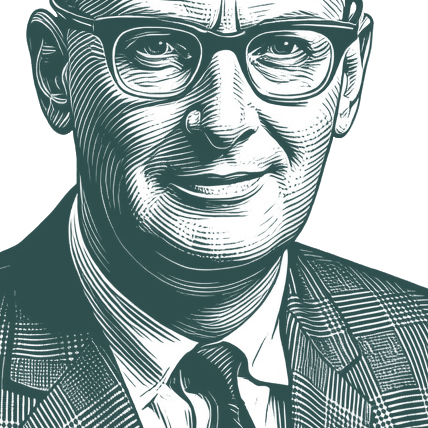
Arthur C. Clarke
Sir Arthur Charles Clarke (16 December 1917 – 19 March 2008) was a British author, inventor and futurist, famous for his short stories and novels, among them 2001: A Space Odyssey (1968), and as a host and commentator in the British television series Mysterious World. For many years, Robert A. Heinlein, Isaac Asimov, and Clarke were known as the "Big Three" of science fiction.
"What is human memory?" Manning asked. He gazed at the air as he spoke, as if lecturing an invisible audience - as perhaps he was. "It certainly is not a passive recording mechanism, like a digital disc or a tape. It is more like a story-telling machine. Sensory information is broken down into shards of perception, which are broken down again to be stored as memory fragments. And at night, as the body rests, these fragments are brought out from storage, reassembled and replayed. Each run-through etches them deeper into the brain's neural structure. And each time a memory is rehearsed or recalled it is elaborated. We may add a little, lose a little, tinker with the logic, fill in sections that have faded, perhaps even conflate disparate events.
"In extreme cases, we refer to this as confabulation. The brain creates and recreates the past, producing, in the end, a version of events that may bear little resemblance to what actually occurred. To first order, I believe it's true to say that everything I remember is false.
Perhaps it is better to be un-sane and happy, than sane and un-happy. But it is the best of all to be sane and happy. Whether our descendants can achieve that goal will be the greatest challenge of the future. Indeed, it may well decide whether we have any future.
Enhance Your Quote Experience
Enjoy ad-free browsing, unlimited collections, and advanced search features with Premium.