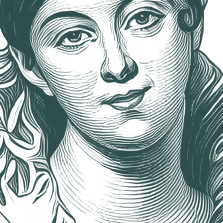
Letitia Elizabeth Landon (August 14, 1802 – October 15, 1838) was an English poet and novelist, better known by her initials L. E. L. She was one of the richest sources of epigrams in the early nineteenth century and one reviewer compared her to Rochefoucauld. Sometimes she adopts an adversarial role, giving contradictory viewpoints. Some of her thoughts recur, either developed or refined, but over time she also threw out differing opinions on some subjects; changeability, she argues, is one of our principal traits and, as she has one character remark, truth is like the philosopher's stone, a thing not to be discovered.
We know not of its presence, though its power Be on the gradual round of every hour, Now flinging down an empire, now a flower.
And o'er them lowers destruction, high in air, Upon those jutting crags, whose rugged sides, Riven in fragments, and like ruins pil'd, Seem as that giants of those ancient days When earthborn creatures braved th' Olympic Gods, Those of whom fable tells, had torn away Rocks from their solid base, and with strong arm, Parted the mountains: there the avalanche hangs, Mighty, but tremulous; just a light breath Will loosen it from off its airy throne; Then down it hurls in wrath, like to the sound Of thunder amid storms, or as the voice Of rushing waters—death in its career.
God ! that this Earth should be so beautiful, And yet so wretched !