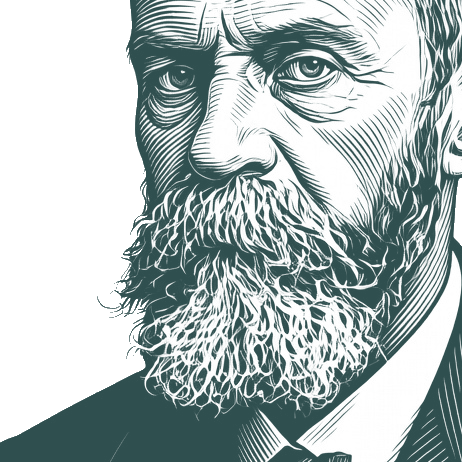
My thinking is first and last and always for the sake of my doing. - William James

" "

My thinking is first and last and always for the sake of my doing.

English
Collect this quote

About William James

William James (11 January 1842 – 26 August 1910) was a pioneering American psychologist and philosopher. He developed the philosophical perspective known as radical empiricism, and wrote influential books on the science of psychology, the psychology of religious experience and mysticism, and the philosophy of pragmatism.

Biography information from Wikiquote

Also Known As

Alternative Names: W. James

Share this quote as an image

Customize card

Unlimited Quote Collections

Organize your favorite quotes without limits. Create themed collections for every occasion with Premium.

Related quotes. More quotes will automatically load as you scroll down, or you can use the load more buttons.

Additional quotes by William James

In modern eyes, precious though wars may be they must not be waged solely for the sake of the ideal harvest. Only when forced upon one, is a war now thought permissible. It was not thus in ancient times. The earlier men were hunting men, and to hunt a neighboring tribe, kill the males, loot the village and possess the females, was the most profitable, as well as the most exciting, way of living. Thus were the more martial tribes selected, and in chiefs and peoples a pure pugnacity and love of glory came to mingle with the more fundamental appetite for plunder. Modern war is so expensive that we feel trade to be a better avenue to plunder; but modern man inherits all the innate pugnacity and all the love of glory of his ancestors. Showing war's irrationality and horror is of no effect on him. The horrors make the fascination. War is the strong life; it is life in extremis; war taxes are the only ones men never hesitate to pay, as the budgets of all nations show us.

However inadequate our ideas of causal efficacy may be, we are less wide of the mark when we say that our ideas and feelings have it, than the Automatists are when they say they haven’t it. As in the night all cats are gray, so in the darkness of metaphysical criticism all causes are obscure. But one has no right to pull the pall over the psychic half of the subject only . . . whilst in the same breath one dogmatizes about material causation as if Hume, Kant, and Lotze had never been born.

Loading...