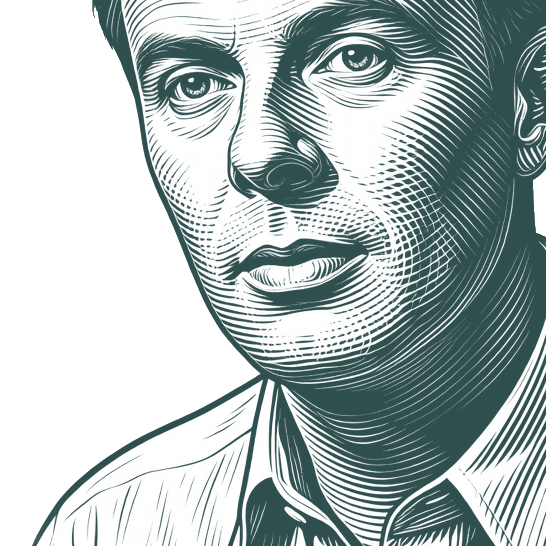
The demagogic propagandist must therefore be consistently dogmatic. All his statements are made without qualification. There are no grays in his pict… - Aldous Huxley
""
The demagogic propagandist must therefore be consistently dogmatic. All his statements are made without qualification. There are no grays in his picture of the world; everything is either diabolically black or celestially white. In Hitler's words, the propagandist should adopt "a systematically one-sided attitude towards every problem that has to be dealt with." He must never admit that he might be wrong or that people with a different point of view might be even partially right. Opponents should not be argued with; they should be attacked, shouted down, or, if they become too much of a nuisance, liquidated. The morally squeamish intellectual may be shocked by this kind of thing. But the masses are always convinced that "right is on the side of the active aggressor."
English
Collect this quote
About
Aldous Huxley
Aldous Leonard Huxley (26 July 1894 – 22 November 1963) was a British author known for his novel Brave New World. He was the grandson of Thomas Henry Huxley and younger brother of Julian Huxley.
Individual insanity is immune to the consequences of collective insanity
Well... ...That's what you always forget, isn't it? I mean, you forget to pay attention to what's happening. And that's the same as not being here and now.
PREMIUM FEATURE
Advanced Search Filters
Filter search results by source, date, and more with our premium search tools.
With me, travelling is frankly a vice. The temptation to indulge in it is one which I find almost as hard to resist as the temptation to read promiscuously, omnivorously and without purpose. From time to time, it is true, I make a desperate resolution to mend my ways. I sketch out programmes of useful, serious reading; I try to turn my rambling voyages into systematic tours through the history of art and civilization. But without much success. After a little I relapse into my old bad ways. Deplorable weakness! I try to comfort myself with the hope that even my vices may be of some profit to me.