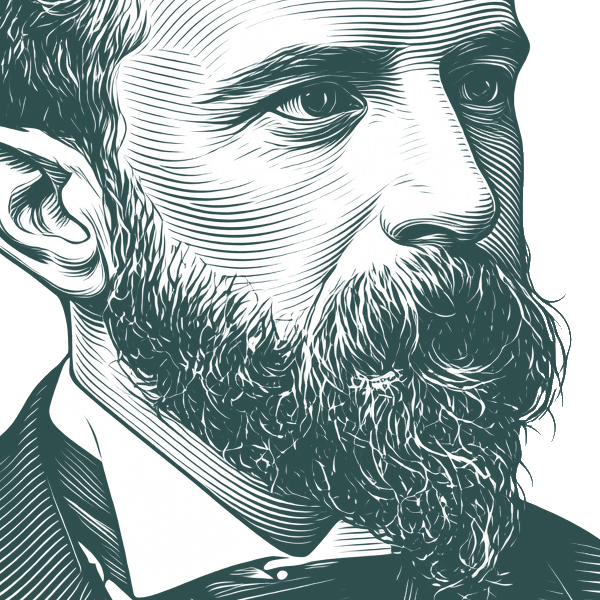
Henry Brooks Adams (16 February 1838 – 27 March 1918) was a U.S. historian, journalist, novelist and educator. He was the great-grandson of John Adams, grandson of John Quincy Adams and son of Charles Francis Adams, Sr.
Biography information from
Wikiquote·
Portrait adapted from
Wikimedia Commons, William Notman (Public domain / CC0)
A new friend is always a miracle...One friend in a lifetime is much; two are many; three are hardly possible. Friendship needs a certain parallelism of life, a community of thought, a rivalry of aim.
I turn green in bed at midnight if I think of the horror of a year's warfare in the Philippines ... We must slaughter a million or two foolish Malays in order to give them the comforts of flannel petticoats and electric railways.
Works in ChatGPT, Claude, or Any AI
Add semantic quote search to your AI assistant via MCP. One command setup.
In his fancy, office was poison; it killed — body and soul — physically and socially. Office was more poisonous than priestcraft or pedagogy in proportion as it held more power; but the poison he complained of was not ambition; he shared none of Cardinal Wolsey's belated penitence for that healthy stimulant, as he had shared none of the fruits; his poison was that of the will — the distortion of sight — the warping of mind — the degradation of tissue — the coarsening of taste — the narrowing of sympathy to the emotions of a caged rat.