The great trouble is that individuals and races in their treatment of each other are not guided by the same high standards of impartiality as an indi… - J. Howard Moore
""
The great trouble is that individuals and races in their treatment of each other are not guided by the same high standards of impartiality as an individual organism in dealing with his own organs and parts. Life is not one. It lacks unity of feeling and purpose. And as long as it lacks this oneness it will lack justice.
English
Collect this quote
About
J. Howard Moore
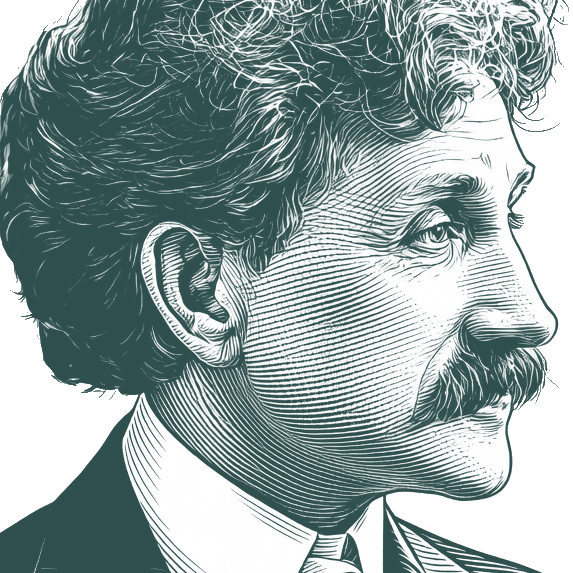
John Howard Moore (December 4, 1862 – June 17, 1916) was an American zoologist, philosopher, educator and social reformer. He advocated for the ethical consideration and treatment of animals and authored several articles, books, essays and pamphlets on topics including education, ethics, evolutionary biology, humanitarianism, utilitarianism and vegetarianism. He is best known for his work The Universal Kinship (1906), which advocated for a secular sentiocentric philosophy he called the doctrine of "Universal Kinship", based on the shared evolutionary kinship between all sentient beings.
The carnivorous life is denounced by the tenderer and more enlightened elements of mankind, and so those under indictment begin to rake and scrape to see what they can turn up in vindication of their beloved and imperilled rapacities. They find, happily, that Nature is 'red in tooth and claw,' that man has 'canine teeth,' and that human beings are without the five stomachs of the ruminantia. Of course, man is a carnivorous animal; couldn't be anything else if he wanted to be; would probably peter out if he attempted it; and it is not necessary to try to be anything else, anyway, if he could be, for he is in harmony with the all-wise and perfectly lovely regime of bloody Nature already. Mighty slim pegs on which to suspend a life of crime, considering that their substance is purely imaginary! But sufficient for those who have made up their minds beforehand to be satisfied with whatever there is.
Zoocentricism, that stage of solidarity in which the entire sentient universe is contemplated, universal consideration and love, is as yet too difficult for human consciousness. Human philosophy, which has been so slow in discovering the solidarity of the human species, is to-day, except in its Oriental manifestations, as reluctant to recognize other species in its ethical contemplations as were dominant human groups in less advanced stages of aggregation reluctant to recognize the solidarity of the hominine species.
Disease is contagious, and death an unavoidable necessity. Pleasure is often exhausting, and life is everywhere interpolated with pain. Droughts, darknesses, floods, pestilences, storms, and scourges harrow the earth from one pole of it to the other. The earth is, and always has been, peopled by deformities—creatures so defective in their natures that they visit upon each other without hesitancy crimes and barbarities of the most horrible hue. These wretches are compelled to pass their lives in the midst of a universe so mysterious and mighty that the most arrogant of us are helpless in the crash and melee of its tendencies. Yet human contemplators look out over this dark and contentious chaos and declare it to be without spot or blemish.