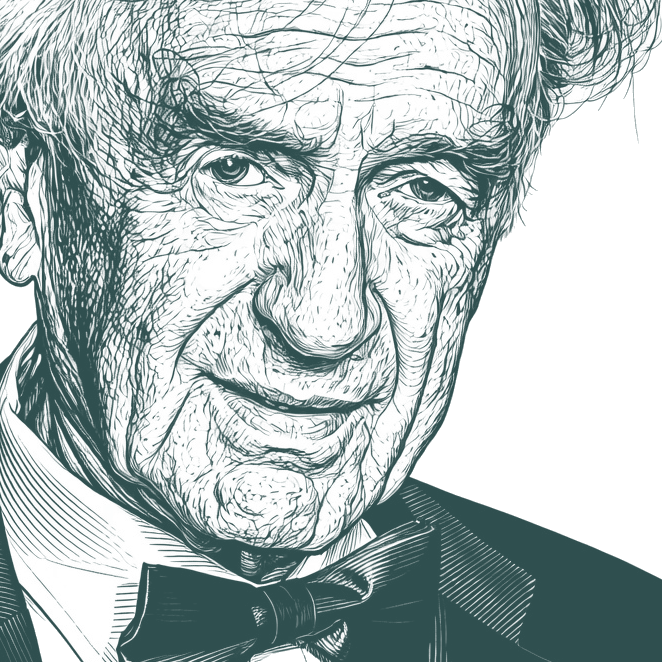
The absent no longer entered our thoughts. One spoke of them who knows what happened to them? but their fate was not on our minds. We were incapable … - Elie Wiesel
""
The absent no longer entered our thoughts. One spoke of them who knows what happened to them? but their fate was not on our minds. We were incapable of thinking. Our senses were numbed, everything was fading into a fog. We no longer clung to anything. The instincts of self-preservation, of self-defense, of pride, had all deserted us. In one terrifying moment of lucidity, I thought of us as damned souls wandering through the void, souls condemned to wander through space until the end of time, seeking redemption, seeking oblivion, without any hope of finding either.
Eliezer "Elie" Wiesel (30 September 1928 – 2 July 2016) was a Romanian-born American Jewish writer, professor, political activist, Nobel Laureate, and Holocaust survivor. He authored 57 books (mostly written in French and English), including Night, a work based on his experience incarcerated in the Auschwitz and Buchenwald concentration camps.