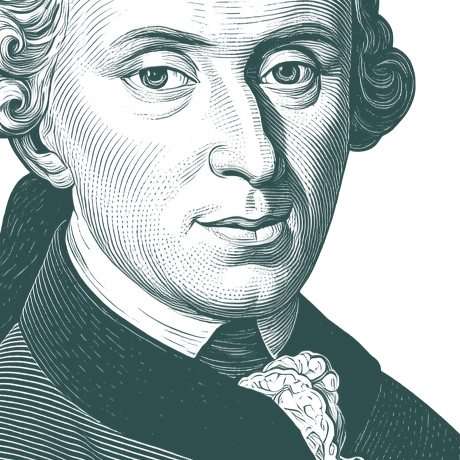
He [Jesus] combines all duties (1) in one universal rule (which includes within itself both the inner and the outer moral relations of men), namely: … - Immanuel Kant

" "

He [Jesus] combines all duties (1) in one universal rule (which includes within itself both the inner and the outer moral relations of men), namely: Perform your duty for no motive other than unconditioned esteem for duty itself, i.e., love God (the Legislator of all duties) above all else; and (2) in a particular rule, that, namely, which concerns man’s external relation to other men as universal duty: Love every one as yourself, i.e., further his welfare from good-will that is immediate and not derived from motives of self-advantage. These commands are not mere laws of virtue but precepts of holiness which we ought to pursue, and the very pursuit of them is called virtue. Accordingly he destroys the hope of all who intend to wait upon this moral goodness quite passively, with their hands in their laps, as though it were a heavenly gift which descends from on high. He who leaves unused the natural predisposition to goodness which lies in human nature (like a talent entrusted to him) in lazy confidence that a higher moral influence will no doubt supply the moral character and completeness which he lacks, is confronted with the threat that even the good which, by virtue of his natural predisposition, he may have done, will not be allowed to stand him in stead because of this neglect (XXV, 29).

English
Collect this quote

About Immanuel Kant

Immanuel Kant (22 April 1724 – 12 February 1804), born Emanuel Kant, was a German philosopher.

Biography information from Wikiquote

Also Known As

Alternative Names: Kant Emanuel Kant
Enhance Your Quote Experience

Enjoy ad-free browsing, unlimited collections, and advanced search features with Premium.

Related quotes. More quotes will automatically load as you scroll down, or you can use the load more buttons.

Additional quotes by Immanuel Kant

Enlightenment is man's emergence from his self-incurred immaturity.

The principle of private happiness, however, is the most objectionable, not merely because it is false, and experience contradicts the supposition that prosperity is always proportioned to good conduct, nor yet merely because it contributes nothing to the establishment of morality - since it is quite a different thing to make a prosperous man and a good man, or to make one prudent and sharp-sighted for his own interests, and to make him virtuous - but because the springs it provides for morality are such as rather undermine it and destroy its sublimity, since they put the motives to virtue and to vice in the same class, and only teach us to make a better calculation, the specific difference between virtue and vice being entirely extinguished. On the other hand, as to moral being, this supposed special sense, the appeal to it is indeed superficial when those who cannot think believe that feeling will help them out, even in what concerns general laws; and besides, feelings which naturally differ infinitely in degree cannot furnish a uniform standard of good and evil, nor has anyone a right to form judgments for others by his own feelings...

Limited Time Offer

Premium members can get their quote collection automatically imported into their Quotewise collections.

The character of the species, as it is indicated by the experience of all ages and all peoples, is this: that taken collectively (the human race as one whole), it is a multitude of persons, existing successively and side by side, who cannot do without associating peacefully and yet cannot avoid constantly offending one another.

Loading...