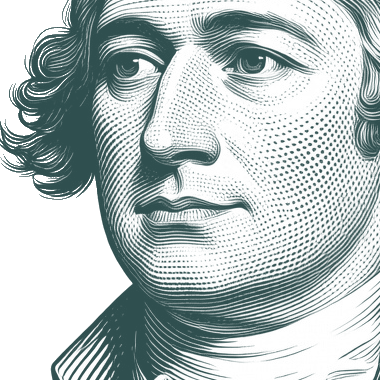
But being ruined by taxes is not the worst you have to fear. What security would you have for your lives? How can any of you be sure you would have t… - Alexander Hamilton
""
But being ruined by taxes is not the worst you have to fear. What security would you have for your lives? How can any of you be sure you would have the free enjoyment of your religion long? Would you put your religion in the power of any set of men living? Remember civil and religious liberty always go together: if the foundation of the one be sapped, the other will fail of course.
Alexander Hamilton (11 January 1755 or 1757 – 12 July 1804) was a Founding Father of the United States, chief staff aide to General George Washington, one of the most influential interpreters and promoters of the U.S. Constitution, the founder of the nation's financial system, the founder of the Federalist Party, the world's first voter-based political party, the Father of the United States Coast Guard, and the founder of The New York Post.
Biography information from
Wikiquote·
Portrait adapted from
Wikimedia Commons, John Trumbull (Public domain / CC0)
Also Known As
Pen Names:
Publius
Alternative Names:
Hamilton
•
Alexander Hamilton, US Treasury secretary
•
A. Ham
In addition to the remarks I have made upon the subject in another place, I shall only observe that as it is a plain dictate of common-sense, so it is also an established doctrine of political law, that “States neither lose any of their rights, nor are discharged from any of their obligations, by a change in the form of their civil government.
having one, it would not have been amiss here. A people, entering into society, surrender such a part of their natural rights, as shall be necessary for the existence of that society.
Try QuoteGPT
Chat naturally about what you need. Each answer links back to real quotes with citations.
The great and radical vice in the construction of the existing Confederation is in the principle of LEGISLATION for STATES or GOVERNMENTS, in their CORPORATE or COLLECTIVE CAPACITIES, and as contradistinguished from the INDIVIDUALS of which they consist.