Anglo-Irish statesman, political theorist and conservative philosopher (1729–1797)
Edmund Burke (12 January 1729 – 9 July 1797) was a British and Irish statesman and philosopher. Born in Dublin, Burke served as a member of parliament (MP) between 1766 and 1794 in the House of Commons of Great Britain with the Whig Party after moving to London in 1750.
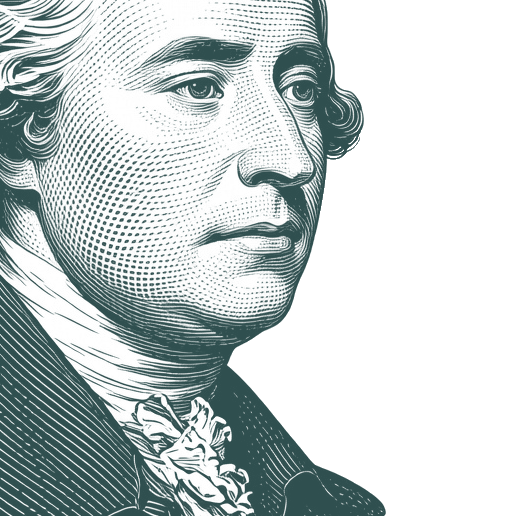
Bio from: Wikiquote (CC BY-SA 4.0) · Portrait adapted from: Wikimedia Commons, Joshua Reynolds (Public domain / CC0)

A diversity of opinion upon almost every principle of politics, had indeed drawn a strong line of separation between them and some others. However, they were desirous not to extend the misfortune by unnecessary bitterness; they wished to prevent a difference of opinion on the commonwealth from festering into rancorous and incurable hostility. Accordingly they endeavoured that all past controversies should be forgotten; and that enough for the day should be the evil thereof. There is however a limit at which forbearance ceases to be a virtue. Men may tolerate injuries, whilst they are only personal to themselves. But it is not the first of virtues to bear with moderation the indignities that are offered to our country.
It is now sixteen or seventeen years since I saw the queen of France, then the dauphiness, at Versailles; and surely never lighted on this orb, which she hardly seemed to touch, a more delightful vision. I saw her just above the horizon, decorating and cheering the elevated sphere she just began to move in, — glittering like the morning-star, full of life, and splendor, and joy. Oh! what a revolution! and what a heart must I have, to contemplate without emotion that elevation and that fall! Little did I dream that, when she added titles of veneration to those of enthusiastic, distant, respectful love, that she should ever be obliged to carry the sharp antidote against disgrace concealed in that bosom; little did I dream that I should have lived to see such disasters fallen upon her in a nation of gallant men, in a nation of men of honour and of cavaliers. I thought ten thousand swords must have leaped from their scabbards to avenge even a look that threatened her with insult. — But the age of chivalry is gone. — That of sophisters, economists, and calculators, has succeeded; and the glory of Europe is extinguished forever. Never, never more shall we behold that generous loyalty to rank and sex, that proud submission, that dignified obedience, that subordination of the heart which kept alive, even in servitude itself, the spirit of an exalted freedom. The unbought grace of life, the cheap defence of nations, the nurse of manly sentiment and heroic enterprise, is gone! It is gone, that sensibility of principle, that chastity of honour which felt a stain like a wound, which inspired courage whilst it mitigated ferocity, which ennobled whatever it touched, and under which vice itself lost half its evil by losing all its grossness.
Indeed it is impossible, in the rapidity and quick succession of words in conversation, to have ideas both of the sound of the word, and of the thing represented; besides, some words, expressing real essences, are so mixed with others of a general and nominal import, that it is impracticable to jump from sense to thought, from particulars to generals, from things to words, in such a manner as to answer the purposes of life; nor is it necessary that we should.
I find it very hard to persuade several that their passions are affected by words from whence they have no ideas; and yet harder to convince them that in the ordinary course of conversation we are sufficiently understood without raising any images of the things concerning which we speak.
The Revolution was made to preserve our ancient, indisputable laws and liberties and that ancient constitution of government which is our only security for law and liberty. If you are desirous of knowing the spirit of our constitution and the policy which predominated in that great period which has secured it to this hour, pray look for both in our histories, in our records, in our acts of parliament, and journals of parliament, and not in the sermons of the Old Jewry and the after-dinner toasts of the Revolution Society. In the former you will find other ideas and another language. Such a claim is as ill-suited to our temper and wishes as it is unsupported by any appearance of authority. The very idea of the fabrication of a new government is enough to fill us with disgust and horror. We wished at the period of the Revolution, and do now wish, to derive all we possess as an inheritance from our forefathers. Upon that body and stock of inheritance we have taken care not to inoculate any scion alien to the nature of the original plant. All the reformations we have hitherto made have proceeded upon the principle of reverence to antiquity.
If I am not mistaken, a great deal of the prejudice in favor of proportion has arisen, not so much from the observation of any certain measures found in beautiful bodies, as from a wrong idea of the relation which deformity bears to beauty, to which it has been considered as the opposite; on this principle it was concluded that where the causes of deformity were removed, beauty must naturally and necessarily be introduced. This I believe is a mistake. For deformity is opposed not to beauty, but to the complete common form.
Unlimited Quote Collections
Organize your favorite quotes without limits. Create themed collections for every occasion with Premium.
That it was common to observe that this was an enlightened Age; but he had thought it for a long time past an ignorant Age. Would you, said he, call a Circulating Library a good Library, because it contains so many books? This Age is much advanced in many useless sciences, & much more respect is shewn to Talent than to wisdom; but I consider our fore-fathers as deeper Thinkers than ourselves, because they set an higher Value on good sense than Knowledge in various Sciences, & this good sense was derived very often from as much study & more knowledge, though of another sort.
The moment a sovereign removes the idea of security and protection from his subjects, and declares that he is everything and they nothing, when he declares that no contract he makes with them can or ought to bind him, he then declares war upon them: he is no longer sovereign; they are no longer subjects.