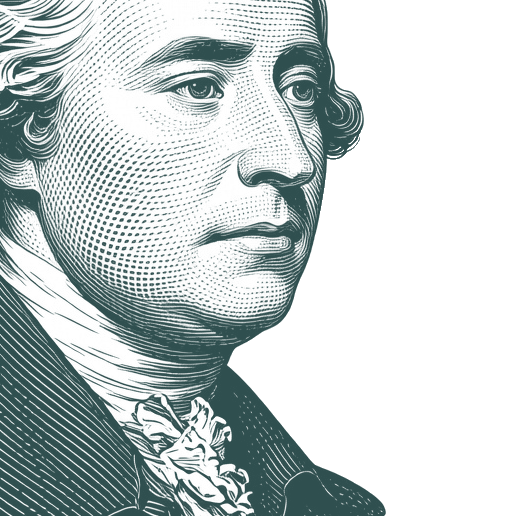
It is better to cherish virtue and humanity, by leaving much to free will, even with some loss to the object, than to attempt to make men mere machin… - Edmund Burke
""
It is better to cherish virtue and humanity, by leaving much to free will, even with some loss to the object, than to attempt to make men mere machines and instruments of a political benevolence. The world on the whole will gain by a liberty, without which virtue cannot exist.
Edmund Burke (12 January 1729 – 9 July 1797) was a British and Irish statesman and philosopher. Born in Dublin, Burke served as a member of parliament (MP) between 1766 and 1794 in the House of Commons of Great Britain with the Whig Party after moving to London in 1750.
Biography information from
Wikiquote·
Portrait adapted from
Wikimedia Commons, Joshua Reynolds (Public domain / CC0)
Related quotes. More quotes will automatically load as you scroll down, or you can use the load more buttons.
Shorter versions of this quote
It is better to cherish virtue and humanity, by leaving much to free will . . . than to attempt to make men mere machines and instruments of a political benevolence.
Is it because liberty in the abstract may be classed amongst the blessings of mankind, that I am seriously to felicitate a madman who has escaped from the protecting restraint and wholesome darkness of his cell on his restoration to the enjoyment of light and liberty? Am I to congratulate a highwayman and murderer who has broke prison upon the recovery of his natural rights? This would be to act over again the scene of the criminals condemned to the galleys, and their heroic deliverer, the metaphysic Knight of the Sorrowful Countenance. When
It was the case of common soldiers deserting from their officers, to join a furious, licentious populace. It was a desertion to a cause, the real object of which was to level all those institutions, and to break all those connexions, natural and civil, that regulate and hold together the community by a chain of subordination; to raise soldiers against their officers; servants against their masters; tradesmen against their customers; artificers against their employers; tenants against their landlords; curates against their bishops; and children against their parents. That this cause of theirs was not an enemy to servitude, but to society.
Enhance Your Quote Experience
Enjoy ad-free browsing, unlimited collections, and advanced search features with Premium.
No sound ought to be heard in the church but the healing voice of Christian charity. The cause of civil liberty and civil government gains as little as that of religion by this confusion of duties. Those who quit their proper character to assume what does not belong to them are, for the greater part, ignorant both of the character they leave and of the character they assume. Wholly unacquainted with the world, in which they are so fond of meddling, and inexperienced in all its affairs, on which they pronounce with so much confidence, they have nothing of politics but the passions they excite. Surely the church is a place where one day's truce ought to be allowed to the dissensions and animosities of mankind.