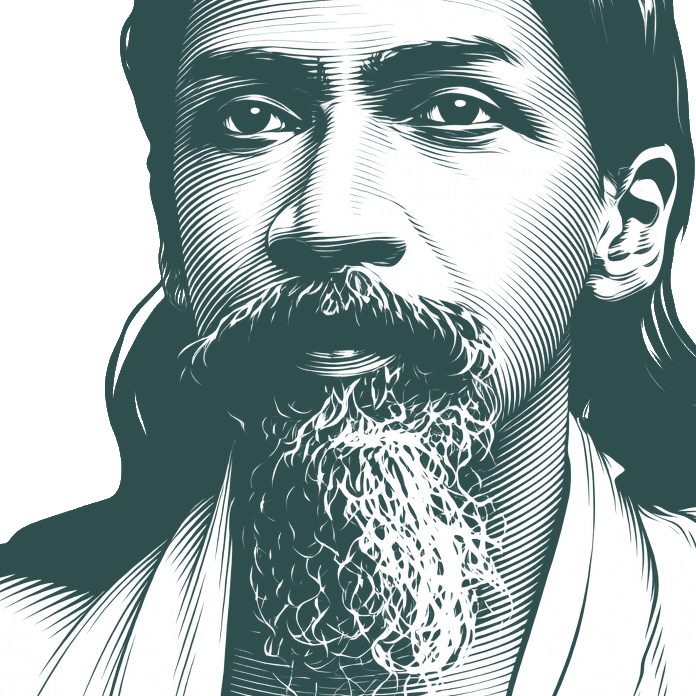
There are moments when the Spirit moves among men and the breath of the Lord is abroad upon the waters of our being; there are others when it retires… - Aurobindo Ghosh
""
There are moments when the Spirit moves among men and the breath of the Lord is abroad upon the waters of our being; there are others when it retires and men are left to act in the strength or the weakness of their own egoism. The first are periods when even a little effort produces great results and changes destiny; the second are spaces of time when much labour goes to the making of a little result. It is true that the latter may prepare the former, may be the little smoke of sacrifice going up to heaven which calls down the rain of God's bounty.... Unhappy is the man or the nation which, when the divine moment arrives, is found sleeping or unprepared to use it, because the lamp has not been kept trimmed for the welcome and the ears are sealed to the call. But thrice woe to them who are strong and ready, yet waste the force or misuse the moment; for them is irreparable loss or a great destruction.... In the hour of God cleanse thy soul of all self-deceit and hypocrisy and vain self-flattering that thou mayst look straight into thy spirit and hear that which summons it. All insincerity of nature, once thy defence against the eye of the Master and the light of the ideal, becomes now a gap in thy armour and invites the blow. Even if thou conquer for the moment, it is the worse for thee, for the blow shall come afterwards and cast thee down in the midst of thy triumph. But being pure cast aside all fear; for the hour is often terrible, a fire and a whirlwind and a tempest, a treading of the winepress of the wrath of God; but he who can stand up in it on the truth of his purpose is he who shall stand; even though he fall, he shall rise again; even though he seem to pass on the wings of the wind, he shall return. Nor let worldly prudence whisper too closely in thy ear; for it is the hour of the unexpected, the incalculable, the immeasurable. Mete not the power of the Breath by thy petty instruments, but trust and go forward.... But most keep thy soul clear, even if for a while, of the clamour of the ego. Then shall a fire march before thee in the night and the storm be thy helper and thy flag shall wave on the highest height of the greatness that was to be conquered.
English
Collect this quote
About
Aurobindo Ghosh
Sri Aurobindo [born Aravinda Akroyd Ghose] (15 August 1872 – 5 December 1950) was an Indian nationalist, scholar, poet, mystic, philosopher, yogi and guru, who developed concepts of human progress and spiritual evolution. With the help of his spiritual collaborator, Mirra Alfassa, he founded the Sri Aurobindo Ashram.
Biography information from
Wikiquote·
Portrait adapted from
Wikimedia Commons, Rudolf 1922 (Public domain / CC0)
Also Known As
Native Name:
অরবিন্দ ঘোষ
Alternative Names:
Sri Aurobindo Ghose
•
Sri Orobindo
•
Orobindo Ghosh
•
Shri Aurobindo
•
Aurobindo Ghose
•
Sri Aurobindo
•
Aurobindo
•
Aravinda Ackroyd Ghose
•
A.A.Ghosh
•
A.G.
•
Maharshi Aravind Babu
A Light there is that leads, a Power that aids; Unmarked, unfelt it sees in him and acts: Ignorant, he forms the All-conscient in his depths, Human, looks up to superhuman peaks: A borrower of Supernature’s gold, He paves his road to Immortality.
03.04_089:053
Forgiveness is praised by the Christian and the Vaishnava, but for me, I ask, "What have I to forgive and whom?"
Unlimited Quote Collections
Organize your favorite quotes without limits. Create themed collections for every occasion with Premium.
How can there be a religion which has no rigid dogmas demanding belief on pain of eternal damnation, no theological postulates, even no fixed theology, no credo distinguishing it from antagonistic or rival religions? How can there be a religion which has no papal head, no governing ecclesiastic body, no church, chapel or congregational system, no binding religious form of any kind obligatory on all its adherents, no one administration and discipline? For the Hindu priests are mere ceremonial officiants without any ecclesiastical authority or disciplinary powers and the Pundits are mere interpreters of the Shastra, not the lawgivers of the religion or its rulers. How again can Hinduism be called a religion when it admits all beliefs, allowing even a kind of high-reaching atheism and agnosticism and permits all possible spiritual experiences, all kinds of religious adventures? The only thing fixed, rigid, positive, clear is the social law, and even that varies in different castes, regions, communities. The caste rules and not the Church; but even the caste cannot punish a man for his beliefs, ban heterodoxy or prevent his following a new revolutionary doctrine or a new spiritual leader.