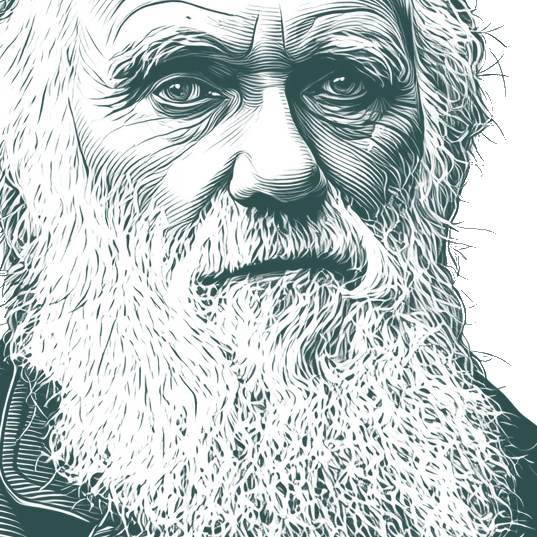
To admit that species generally become rare before they become extinct — to feel no surprise at the comparative rarity of one species with another, a… - Charles Darwin
""
To admit that species generally become rare before they become extinct — to feel no surprise at the comparative rarity of one species with another, and yet to call in some extraordinary agent and to marvel greatly when a species ceases to exist, appears to me much the same as to admit that sickness in the individual is the prelude to death — to feel no surprise at sickness — but when the sick man dies to wonder, and to believe that he died through violence.
Charles Robert Darwin (12 February 1809 – 19 April 1882) was an English naturalist, geologist and biologist, best known for his contributions to the science of evolution. He proposed that evolution could be explained in part through natural and sexual selection. Prompted by awareness that Alfred Russel Wallace was developing similar theories he published his own sooner than he had originally intended. This theory is now an integral component of biological science.
Biography information from
Wikiquote·
Portrait adapted from
Wikimedia Commons, Herbert Rose Barraud (Public domain / CC0)
Also Known As
Birth Name:
Charles Robert Darwin
Alternative Names:
Charles R. Darwin
•
C. R. Darwin
•
Darwin
•
C.R. Darwin
•
CR Darwin
"I sometimes think that general and popular treatises are almost as important for the progress of science as original work”
A grain in the balance will determine which individual shall live and which shall die - which variety or species shall increase in number, and which shall decrease, or finally become extinct.
Try QuoteGPT
Chat naturally about what you need. Each answer links back to real quotes with citations.
I find I look at this province with very different eyes then when I arrived. I recollect I then thought of it as singularly level, but now after galloping over the montañas my own only surprise is what could have induced me to have ever called it level!