dangerous ambition more often lurks behind the specious mask of zeal for the rights of the people than under the forbidden appearance of zeal for the… - Alexander Hamilton
""
dangerous ambition more often lurks behind the specious mask of zeal for the rights of the people than under the forbidden appearance of zeal for the firmness and efficiency of government. History will teach us that the former has been found a much more certain road to the introduction of despotism than the latter, and that of those men who have overturned the liberties of republics, the greatest number have begun their career by paying an obsequious court to the people; commencing demagogues, and ending tyrants.
Alexander Hamilton (11 January 1755 or 1757 – 12 July 1804) was a Founding Father of the United States, chief staff aide to General George Washington, one of the most influential interpreters and promoters of the U.S. Constitution, the founder of the nation's financial system, the founder of the Federalist Party, the world's first voter-based political party, the Father of the United States Coast Guard, and the founder of The New York Post.
Biography information from
Wikiquote·
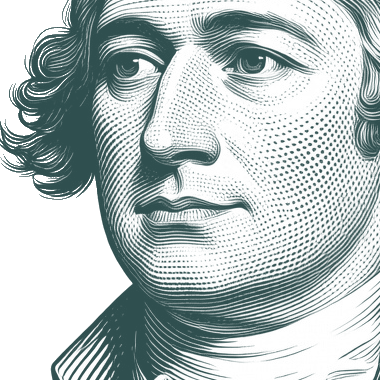
Portrait adapted from
Wikimedia Commons, John Trumbull (Public domain / CC0)
Also Known As
Pen Names:
Publius
Alternative Names:
Hamilton
•
Alexander Hamilton, US Treasury secretary
•
A. Ham
I always feel how necessary you are to me. But when you are absent, I become still more sensible of it and look around in vain for that satisfaction which you alone can bestow.
Personal estate (as has been before remarked), from the difficulty in tracing it, cannot be subjected to large contributions, by any other means than by taxes on consumption. In populous cities, it may be enough the subject of conjecture, to occasion the oppression of individuals, without much aggregate benefit to the State; but beyond these circles, it must, in a great measure, escape the eye and the hand of the tax-gatherer. As the necessities of the State, nevertheless, must be satisfied in some mode or other, the defect of other resources must throw the principal weight of public burdens on the possessors of land.
The often-agitated question between agriculture and commerce has, from indubitable experience, received a decision which has silenced the rivalship that once subsisted between them, and has proved, to the satisfaction of their friends, that their interests are intimately blended and interwoven. It has been found in various countries that, in proportion as commerce has flourished, land has risen in value. And how could it have happened otherwise? Could that which procures a freer vent for the products of the earth, which furnishes new incitements to the cultivation of land, which is the most powerful instrument in increasing the quantity of money in a state — could that, in fine, which is the faithful handmaid of labor and industry, in every shape, fail to augment that article, which is the prolific parent of far the greatest part of the objects upon which they are exerted? It is astonishing that so simple a truth should ever have had an adversary; and it is one, among a multitude of proofs, how apt a spirit of ill-informed jealousy, or of too great abstraction and refinement, is to lead men astray from the plainest truths of reason and conviction.