The most dangerous thing you can do is to take any one impulse of your own nature and set it up as the thing you ought to follow at all costs. There … - C. S. Lewis
""
The most dangerous thing you can do is to take any one impulse of your own nature and set it up as the thing you ought to follow at all costs. There is not one of them which will not make us into devils if we set it up as an absolute guide. You might think love of humanity in general was safe, but it is not. If you leave out justice you will find yourself breaking agreements and faking evidence in trials "for the sake of humanity", and become in the end a cruel and treacherous man.
Clive Staples Lewis (29 November 1898 – 22 November 1963) was an Irish author, scholar of medieval literature, and Christian apologist. He is best known for his essays on Christianity and for the children's fantasy series The Chronicles of Narnia.
Biography information from
Wikiquote·
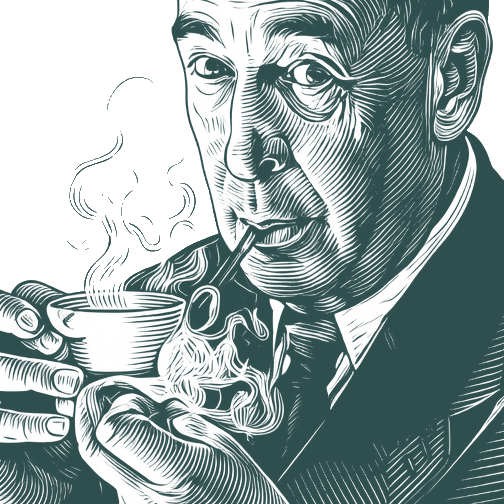
Portrait adapted from
Wikimedia Commons, John S. Murray (Public domain / CC0)
Also Known As
Pen Names:
N. W. Clerk
•
Clive Hamilton
Birth Name:
Clive Staples Lewis
Alternative Names:
CS Lewis
•
C.S. Lewis
•
Clive Lewis
•
Nat Whilk
It would seem that Our Lord finds our desires not too strong, but too weak. We are half-hearted creatures, fooling about with drink and sex and ambition when infinite joy is offered us, like an ignorant child who wants to go on making mud pies in a slum because he cannot imagine what is meant by the offer of a holiday at the sea. We are far too easily pleased.
The Guide sang: Nearly they stood who fall; Themselves as they look back See always in the track The one false step, where all Even yet, by lightest swerve Of foot not yet enslaved, By smallest tremor of the smallest nerve, Might have been saved. Nearly they fell who stand, And with cold after fear Look back to mark how near They grazed the Siren's land, Wondering that subtle fate, By threads so spidery fine, The choice of ways so small, the event so great, Should thus entwine. Therefore oh, man, have fear Lest oldest fears be true, Lest thou too far pursue The road that seems so clear, And step, secure, a hair-breadth bourne, Which, being once crossed forever unawares, Denies return.
PREMIUM FEATURE
Advanced Search Filters
Filter search results by source, date, and more with our premium search tools.