If it were your Harry, mother, or your Willie, that were going to be torn from you by a brutal trader, tomorrow morning, — if you had seen the man, a… - Harriet Beecher Stowe
""
If it were your Harry, mother, or your Willie, that were going to be torn from you by a brutal trader, tomorrow morning, — if you had seen the man, and heard that the papers were signed and delivered, and you had only from twelve o'clock till morning to make good your escape, — how fast could you walk? How many miles could you make in those few brief hours, with the darling at your bosom, — the little sleepy head on your shoulder, — the small, soft arms trustingly holding on to your neck?
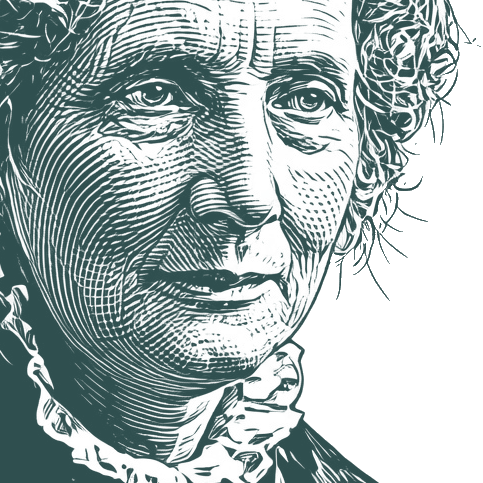
Harriet Elizabeth Beecher Stowe (14 June 1811 – 1 July 1896) was an American abolitionist and writer, most famous as the author of the anti-slavery novel Uncle Tom's Cabin.
Biography information from
Wikiquote·
Portrait adapted from
Wikimedia Commons, not specified (Public domain / CC0)
Also Known As
Birth Name:
Elizabeth Harriet Beecher
Native Name:
Harriet Beecher
Alternative Names:
Christopher Crowfield
•
Harriet Elizabeth Beecher Stowe
•
Enrieta Elizabeth Beecher Stowe
•
Harriet Elizabeth Beecher
•
Harriet Elisabeth Beecher Stowe
•
Harriet Elizabeth Beecher-Stowe
Related quotes. More quotes will automatically load as you scroll down, or you can use the load more buttons.
Shorter versions of this quote
If it were your Harry, mother, or your Willie, that were going to be torn from you by a brutal trader, tomorrow morning, — if you had seen the man, and heard that the papers were signed and delivered, and you had only from twelve o'clock till morning to make good your escape, — how fast could you walk?
The heart has no tears to give, -it drops only blood, bleeding itself away in silence.
When you get into a tight place and everything goes against you until it seems that you cannot hold on for a minute longer, never give up then, for that is just the place and time when the tide will turn.
Whatever offices of life are performed by women of culture and refinement are thenceforth elevated; they cease to be mere servile toils, and become expressions of the ideas of superior beings.